Queen Mother Champion Chase: Speed and Jumping at Two Miles
 Available in US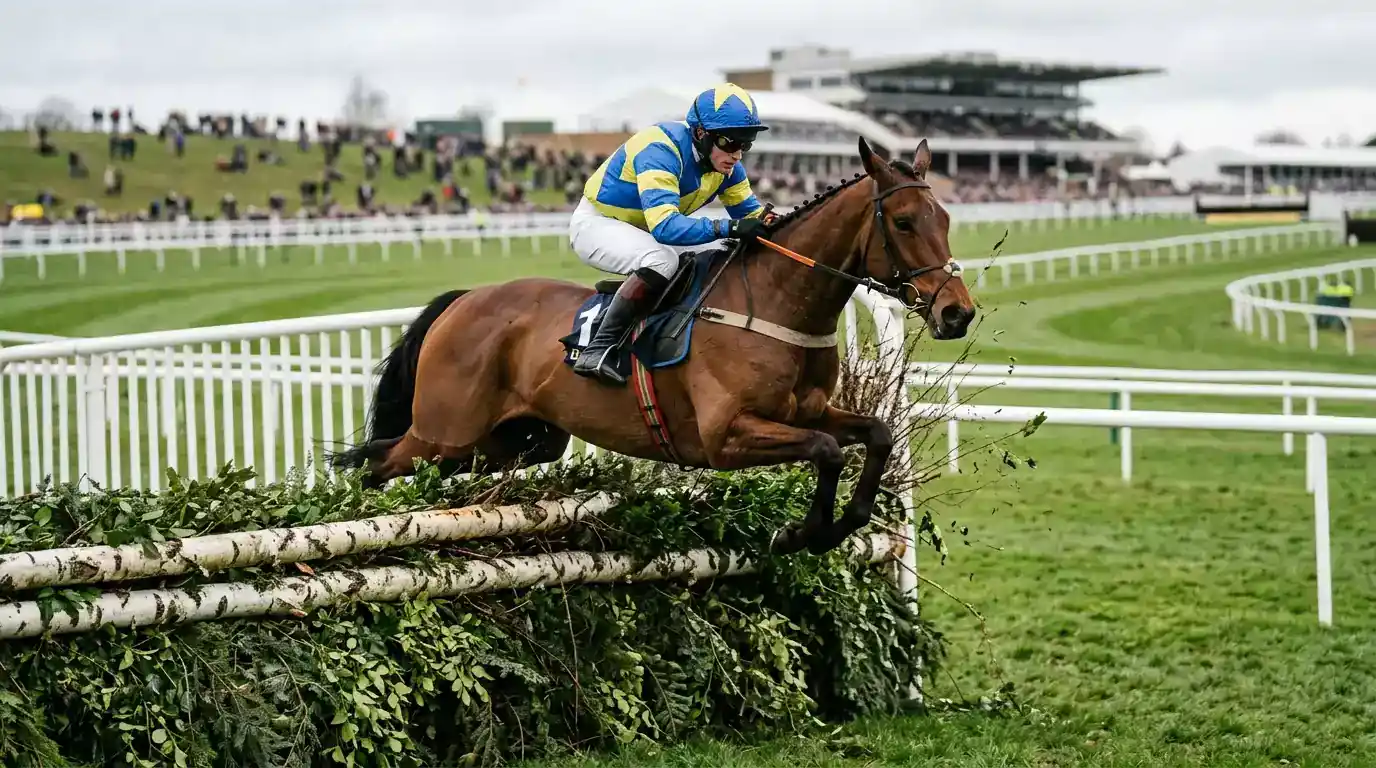
The race where a single mistake decides the result
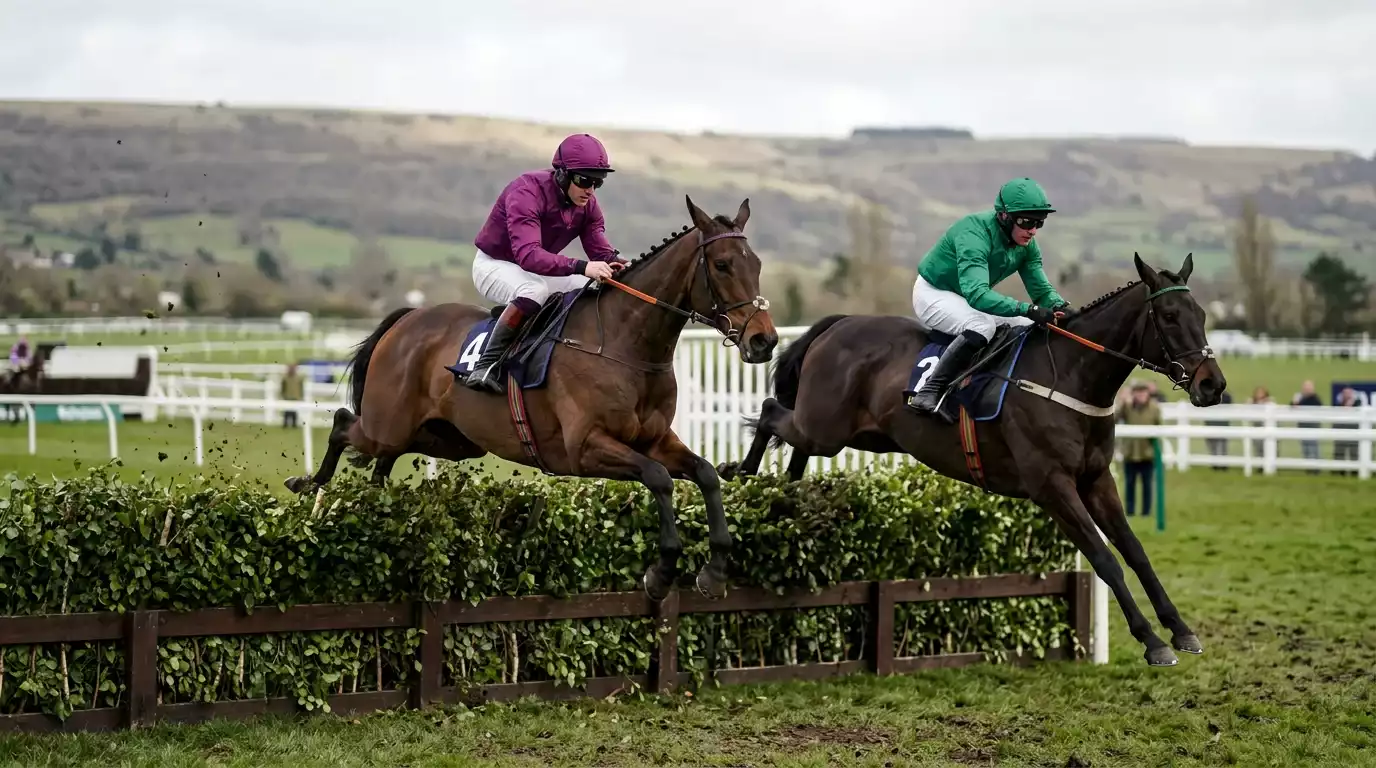
At two miles over fences, the margin between winning a Grade 1 chase and finishing down the field is thinner than in any other race at Cheltenham. Horses run at genuine speed over twelve fences, and a single mistake – a clipped top board, a lost length at the open ditch, a slightly awkward jump at the third-last – is often the difference between a winning run and a placed one. The Queen Mother Champion Chase is the two-mile championship of jump racing, and the thing that makes it bet so sharply is that the variables that decide it are jumping-specific rather than stamina-based.
This is why the race rewards a specific kind of form analysis. Speed ratings at two miles matter. Jumping economy over fences at racing pace matters enormously. Previous experience at the festival matters. And a horse’s capacity to recover from a minor error at mid-race – to hold its rhythm, not lose concentration, keep jumping cleanly in the run to the finish – often matters more than abstract class. A “good horse” who jumps awkwardly is not a good Queen Mother horse. Cleanness is the signal.
Race format: two-mile chase
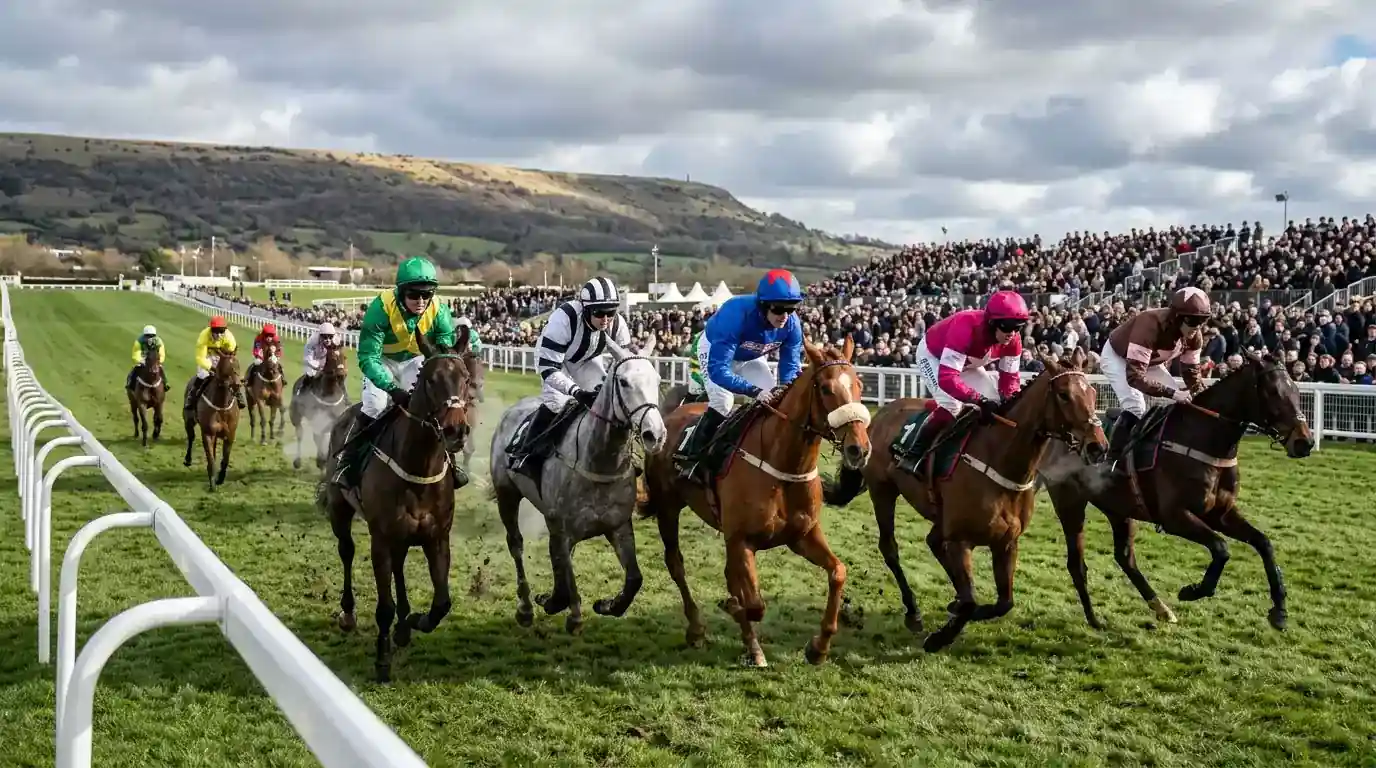
The Queen Mother Champion Chase is a Grade 1 chase run over two miles and half a furlong on the Wednesday of Cheltenham Festival. Level weights, 7-pound allowance for mares, typical fields of six to twelve runners. Twelve fences to jump, including four in the back straight and the sequence through the famous Cheltenham downhill. The winning time averages just over four minutes – a genuine speed test, not a sustained stamina event – and the horses capable of winning combine top-class two-mile chasing form with the jumping accuracy to hold position at pace.
The fences at Cheltenham are standard steeplechase fences in size, but the way the course rides means the jumping demands are different from those of most other Grade 1 chases. The downhill sequence from the top of the hill to the home turn encourages horses to run through themselves, and errors at the fences approaching the downhill are magnified by the changing ground underfoot. A horse that jumps cleanly on the flat at Sandown doesn’t automatically jump cleanly on the Cheltenham camber. Course-specific experience is a legitimate filter.
Field sizes are smaller than handicap races at the same meeting because the Queen Mother is a championship race that’s self-limiting: only top-class two-mile chasers contest it, and the population of those horses in any given season is small. A typical renewal runs with seven or eight genuine contenders plus a couple of pace-setters or outsiders trying to place. That small-field dynamic produces sharper market pricing – it’s harder to hide a weak favourite when there’s only three or four real alternatives.
Jumping profile of past winners
The jumping profile of Queen Mother winners over the last two decades is strikingly consistent. Clean fluency at racing pace. Ability to meet fences on a long stride when asked to stretch, and to take shorter-strides approaches when the gap between horse and obstacle is tight. Recovery from the occasional awkward jump without losing position or rhythm. These are the observable traits of a genuine two-mile Champion Chase horse, and they show up on video review of prep races more clearly than in statistics.
What separates contenders from pretenders is usually the third-last at Cheltenham. Horses who jump the third-last awkwardly at speed, on the downhill, tend to lose the race there – even if they’d jumped every other fence cleanly and had enough in the tank to win. The landing angle, the change of camber, and the proximity to the final two obstacles make the third-last a make-or-break jump, and watching past races will show you which horses found it difficult.
Within the winning profile, there’s a secondary signal: horses who’ve won at Cheltenham before, particularly in the autumn or winter meetings there, carry a measurable edge. Course experience at Prestbury Park matters more for two-mile chasing than for stayers’ hurdles or Gold Cup races, because the specific cambers and gradients affect jumping more when horses are moving at higher speeds.
Industry figures give a sense of scale: all 28 races across the four days of Cheltenham Festival ranked among the top 31 most-backed races of 2025, with William Hill projecting around £450 million wagered across the four days. The Queen Mother, on Wednesday afternoon, draws its full share of that volume – and the combination of market depth and short-field pricing means genuine value on the Queen Mother is usually found through specific jumping analysis rather than price-shopping the obvious names.
Speed figures at two miles
Speed at two miles over fences is measurable, but the measurement is less straightforward than for flat racing. Sectional timing and going-adjusted speed figures can give you relative rankings, but the numbers matter in combination with jumping cleanness rather than in isolation. A horse with a headline speed figure of 170 but who jumps the last three fences awkwardly at Grade 1 pace is slower in practice than a horse with a figure of 165 and clean fluency throughout.
Where speed figures help most is in comparing horses coming from different prep races. A horse winning the Tingle Creek at Sandown in December on soft ground and a horse winning the Clarence House at Cheltenham on good-to-soft run very different races; raw finishing times don’t compare directly, but going-adjusted figures bring the two form lines onto a common scale. Horses returning elevated speed figures across multiple two-mile chase wins in a season typically represent the core of a Queen Mother shortlist.
The Tingle Creek and the Clarence House are the two most reliable pre-Cheltenham trials for Queen Mother contenders. A horse that’s won either race is on the championship path; a horse that’s won both is usually in the top handful in the Cheltenham market. Horses winning smaller Grade 2 two-mile chases without having tested themselves in a Grade 1 trial don’t typically show up in the Queen Mother winners’ list, though they produce placed runs occasionally.
Betting angles and value
My working framework for the Queen Mother: start with course-proven top-class two-mile chasers, filter for clean jumping (verified through prep-race video review, not just form comments), and then examine recent speed figures against the race trend. That produces a shortlist of typically three to five horses in a given year. Pricing that shortlist against the broader market is usually where genuine value shows up, because the market tends to over-price the race’s absolute favourites and under-price the clear-second-best-jumper.
Each-way betting on the Queen Mother is less attractive than on the handicaps of the festival because field sizes are small. On fields of eight or fewer runners, each-way places revert to three places at 1/5 odds under standard UK rules, and with only three places paid the place-half math often doesn’t beat win-only on well-fancied contenders. The exception is when extras offers apply – some firms offer four places on feature Grade 1 chases – and the arithmetic shifts favourably there.
Ante-post on the Queen Mother typically offers value in the autumn-to-early-winter window, similar to the Gold Cup. NRNB concessions usually activate in February, and the February-onwards window gives the cleanest risk-adjusted value for punters who don’t want to carry withdrawal risk. The small population of true contenders means trading movement within the final month is usually limited in percentage terms – a horse priced 5/2 in February rarely becomes 4/1 by race day without specific negative news.
Finally, on the day itself: avoid betting into pace-affected in-play prices. The Queen Mother in-play market sometimes swings on a single jump – a horse who makes an error at the fourth-last can move from 3/1 favourite to 6/1 within two seconds, before either recovering or being passed. In-play on championship chases at this pace rewards genuine real-time jumping expertise, not casual reaction, and the exchange spreads move too fast for most retail punters to execute cleanly. Pre-race positions are the right tool for most approaches; in-play is a specialist’s game at this race in particular.
For the full picture of betting across the four days of the festival – Champion Hurdle, Stayers’ Hurdle, Gold Cup and the wider festival shape – our Cheltenham Festival betting playbook puts the Queen Mother alongside the rest of the week’s key angles.
Is clean jumping the biggest single factor?
At two miles over Cheltenham fences at Grade 1 pace, yes – jumping cleanness is the most reliable single predictor of Queen Mother performance. Horses with elite two-mile chasing form who jump awkwardly at racing pace get found out on the Cheltenham course, where the downhill sequence and the third-last fence in particular punish even minor errors. Class without jumping fluency doesn’t win this race; the reverse combination sometimes does.
Do course specialists repeat?
Often, yes. Horses who’ve won at Cheltenham over fences in the autumn or winter before the festival have a measurable edge at the Queen Mother, because the specific cambers and gradient of the course affect jumping more at two miles than at longer trips. Course-and-distance form at Prestbury Park is a legitimate filter for Queen Mother selection, and it’s meaningfully more predictive than generic Grade 1 two-mile chase form at other tracks.
Prepared by the Betting for Horse Racing editorial staff.