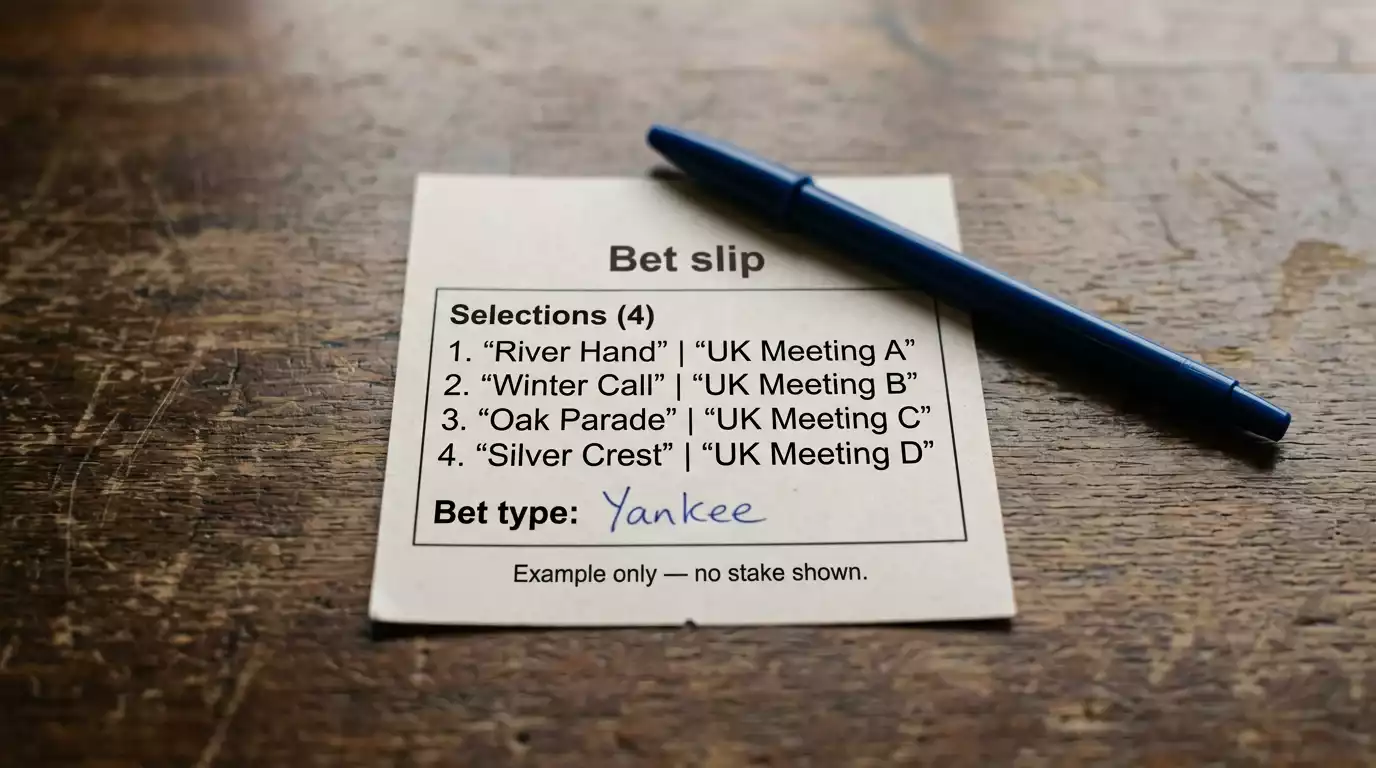
Account Restrictions and Bet Limits on UK Racing Bettors
 Available in US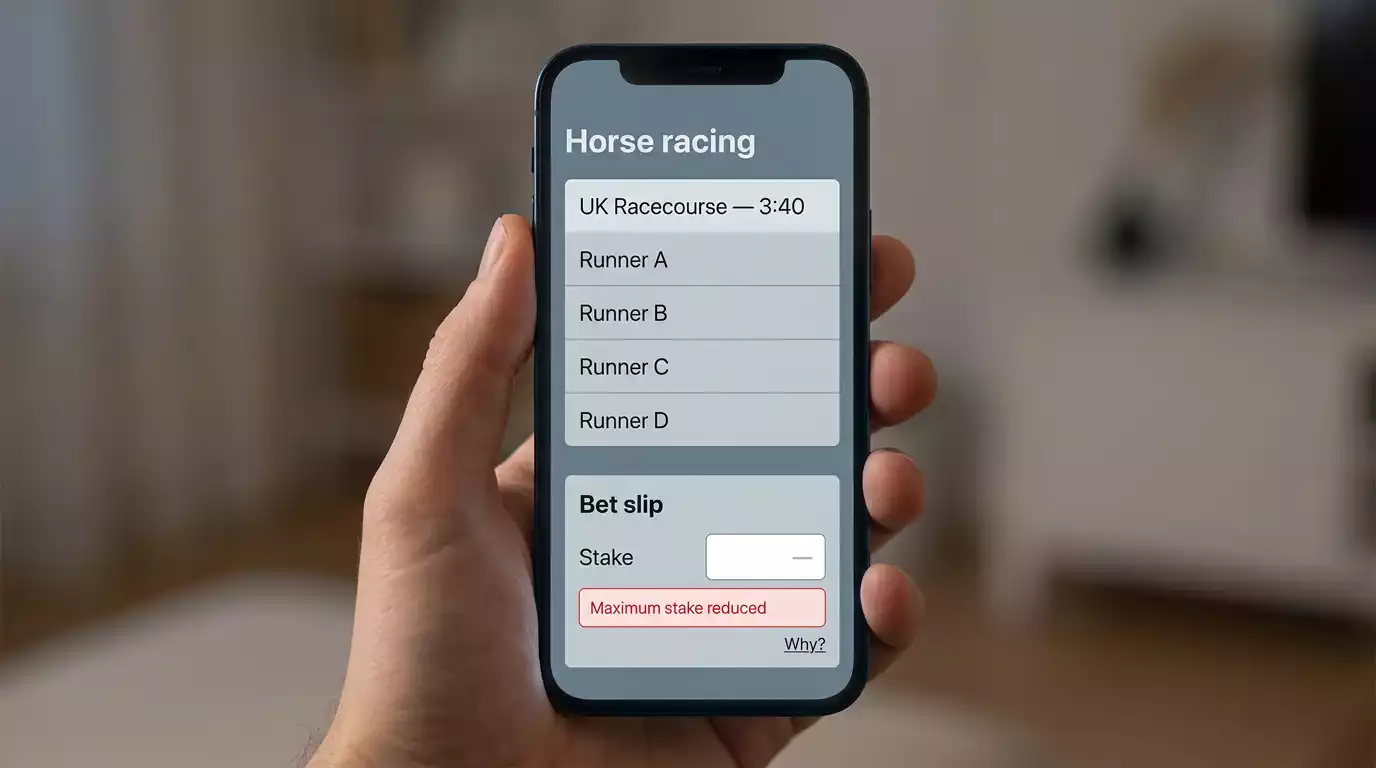
When “restricted” became the default
Ten years ago, if your account got restricted by a UK bookmaker, it was a badge of honour – proof you were winning enough to bother the trading team. Today, 44 per cent of respondents in the Racing Post Big Punting Survey 2025 reported having restrictions on at least one account, up from 35 per cent two years earlier. That is not a sharps-only phenomenon any more. That is the market itself restructuring around a lower risk tolerance on the operator side, and most punters still treat restrictions as something that happens to other people.
This piece unpacks what restrictions actually look like on a UK racing account, why operators apply them, the subtle but important distinction between gubbing and stake factoring, and what you can realistically do to keep an account live. I’m not going to pretend there’s a magic trick that beats the algorithms. There isn’t. But there are working habits that materially extend account lifespan, and most punters don’t use them.
What restrictions actually look like
Restrictions come in a spectrum, not as a binary “open or closed”. The mildest form is maximum-stake limitation: the operator silently caps how much you can stake on any given bet, usually starting at around 25 to 50 per cent of the market standard. You only notice when you try to place a bet and the slip returns “maximum stake exceeded” at a figure lower than the race’s published maximum.
Next up is market-specific restriction. You’re allowed normal stakes on win-only markets but capped on each-way, or allowed full stakes on flat but capped on jumps, or excluded from certain promotions and bonus markets. This is targeted at whatever the operator’s model has flagged as your profitable segment. It’s a smart restriction from the firm’s point of view and an irritating one from the punter’s, because it doesn’t close the account – it just removes the part of the account where you had an edge.
Then comes the blanket stake factor. Every bet you try to place settles at a percentage of requested stake – sometimes 20 per cent, sometimes 5 per cent, sometimes a number so low the account becomes functionally unusable. The operator will rarely tell you what factor has been applied. You work it out by trial and error, or by comparing against another punter’s successful placement on the same selection.
The most severe restriction is full withdrawal limitation combined with zero-stake bets – the account can only place “for fun” bets, with no real money accepted. Technically the account is open. Practically it is closed. This is the terminal stage, typically preceding the operator formally closing the account.
Why bookmakers restrict accounts
The stated reason is always “business decision”, because the account terms allow that phrase and it can’t be argued with. The real reasons are narrower. Consistent profit across a sample of bets large enough to be statistically meaningful triggers restriction almost everywhere. A specific pattern of early-market backing on horses that subsequently shorten heavily – what traders call “price-sensitive” action – triggers restriction even faster, sometimes within a week of account opening.
Promotion abuse is another major trigger. If an account’s betting pattern looks like value hunting on enhanced-odds promotions without corresponding activity elsewhere, the restriction usually comes before you’ve had time to cash out a third promotional bet. Same for accounts that deposit only to qualify for a bonus, grind the bonus through low-house-edge markets, and withdraw. These patterns are exactly what operators are watching for.
Nevin Truesdale, the former chief executive of the Jockey Club, put the tension between the regulatory and commercial pressures on operators neatly: “The Gambling Commission seems to want to reduce gambling to just small-stakes gamblers and that can’t be right.” The regulatory push for safer-gambling profiles and the commercial push for restricting profitable accounts pull in the same direction from the operator’s perspective – both reduce high-stake, informed-punter activity. Whether you agree with the policy direction or not, the operational reality on accounts is that the two pressures have compounded rather than cancelled each other.
The consequence for the market: UK racing saw total betting turnover fall 4.3 per cent in 2025 compared with 2024, and 10.7 per cent against 2023. Restricted accounts aren’t the only reason, but they’re a measurable component of the decline – money that would have been wagered at full stakes instead sits either unwagered or diverts elsewhere. The industry is restructuring around this reality.
Gubbing versus stake factor
“Gubbing” is slang for promotion exclusion – the operator removes your access to bonuses, free bets, enhanced odds, and offers. You can still bet at full stakes on standard prices, but the promotional uplift that gives many recreational punters their edge is gone. Gubbing is often the first restriction applied and is reversible in some cases if the account’s pattern shifts back towards standard recreational activity.
Stake factor is a different mechanism. The operator doesn’t remove promotions; they reduce your effective stake size on any market. A £50 requested bet settles as a £10 bet because the trading system has multiplied your request by 0.2. Stake factor is harder to notice because there’s no prominent notification – the bet accepts, just at a smaller size. Some punters don’t realise stake factor is applied for weeks because they rarely try to bet at or near the market maximum.
The two mechanisms can and often do coexist on the same account. You can be gubbed (no promotions) and stake-factored (reduced stakes) simultaneously, particularly on accounts the operator wants to keep technically open for regulatory reasons – closing a customer account entirely sometimes creates more compliance overhead than leaving it live but effectively useless.
How to extend account life
Nothing here is a guarantee. What follows is a set of behavioural habits that correlate with longer account survival in UK racing markets based on observed patterns over my nine years in the space. They don’t make you untouchable. They do move the clock.
First, don’t only bet the markets where you have an edge. An account that bets exclusively on Saturday morning value prices, never touches an accumulator, never places a novelty bet, and never interacts with festival offers looks exactly like what the trading system is built to identify. Account diversification – some singles, some each-way, some longshot bets that won’t land – disguises the pattern. I’m not suggesting you bet poorly to protect the account; I’m suggesting you bet the full range of bets a typical punter places, not just the narrow segment where you win.
Second, avoid promotional arbitrage. Enhanced-odds offers and price-boosted bets are heavily monitored. A handful of promo bets across a year is normal. Weekly promo-hunting is a tell. The account gets gubbed, then stake-factored, then closed, usually inside three months.
Third, deposit and withdraw in patterns that don’t scream “I’m grinding a bankroll”. Daily deposit-and-withdraw cycles trigger all kinds of model alerts, regulatory and commercial. Fewer, larger deposits with bets placed across time are a more natural shape. The affordability check framework sits alongside the restrictions framework, and both draw on some of the same behavioural markers – erratic deposit patterns feed both systems.
Fourth, spread across operators. The BGC estimates around 300,000 UK racing customers have reached affordability thresholds; 44 per cent of Big Punting Survey 2025 respondents have restrictions somewhere. If you concentrate a large proportion of your staking at one firm, you’re exposed to that firm’s single decision to restrict. Three or four accounts with modest activity at each survive longer than one account with heavy activity. ToffeeWeb’s rough estimate of 2 to 5 per cent returns improvement from using multiple operators is real, and the account-survival angle is an additional reason beyond the price comparison.
Fifth, place some losing bets. This sounds perverse but the pattern recognition matters. An account that wins too consistently looks like a sharp account. An account with normal variance – wins and losses in roughly market-expected proportion – looks like a recreational one. You don’t need to manufacture losses, but if your strike rate has been unusually high for a run, accept the fact and don’t artificially narrow your betting to protect it further.
For the regulatory context that shapes all of these restrictions – affordability framework, operator obligations, and the migration pressures on UK racing punters – our guide to affordability checks and UK horse racing betting walks through the full landscape.
Can I appeal a stake restriction?
You can submit a complaint through the operator’s internal process and escalate unresolved cases to the Alternative Dispute Resolution provider listed on the operator’s site. In practice, account restriction appeals succeed rarely – the account terms almost universally permit the operator to refuse or limit any bet at their discretion, and ADR providers have limited scope to compel a commercial decision to be reversed. The realistic response to a restriction is usually to spread activity elsewhere, not to fight the decision.
Do restrictions carry across sister brands?
Often, yes. Many UK bookmakers operate multiple brands under a single corporate parent – the same trading system and the same risk model typically apply across all brands of a group. If you’re restricted at one, you’re frequently restricted at the sister brands within days, if not immediately. Genuine brand diversification means diversifying across corporate owners, not across brand names.
Does a restricted account get reported to the UKGC?
No. Account restrictions are commercial decisions and aren’t reported to the UKGC as individual events. Restrictions are only UKGC-relevant if they relate to safer gambling interventions rather than trading limits – and even then, only the operator’s aggregate handling of safer-gambling cases is subject to Commission oversight, not individual account histories. Your restricted status is private between you and the operator.
Created by the ”Betting for Horse Racing” editorial team.