Responsible Gambling for UK Horse Racing Bettors
 Available in US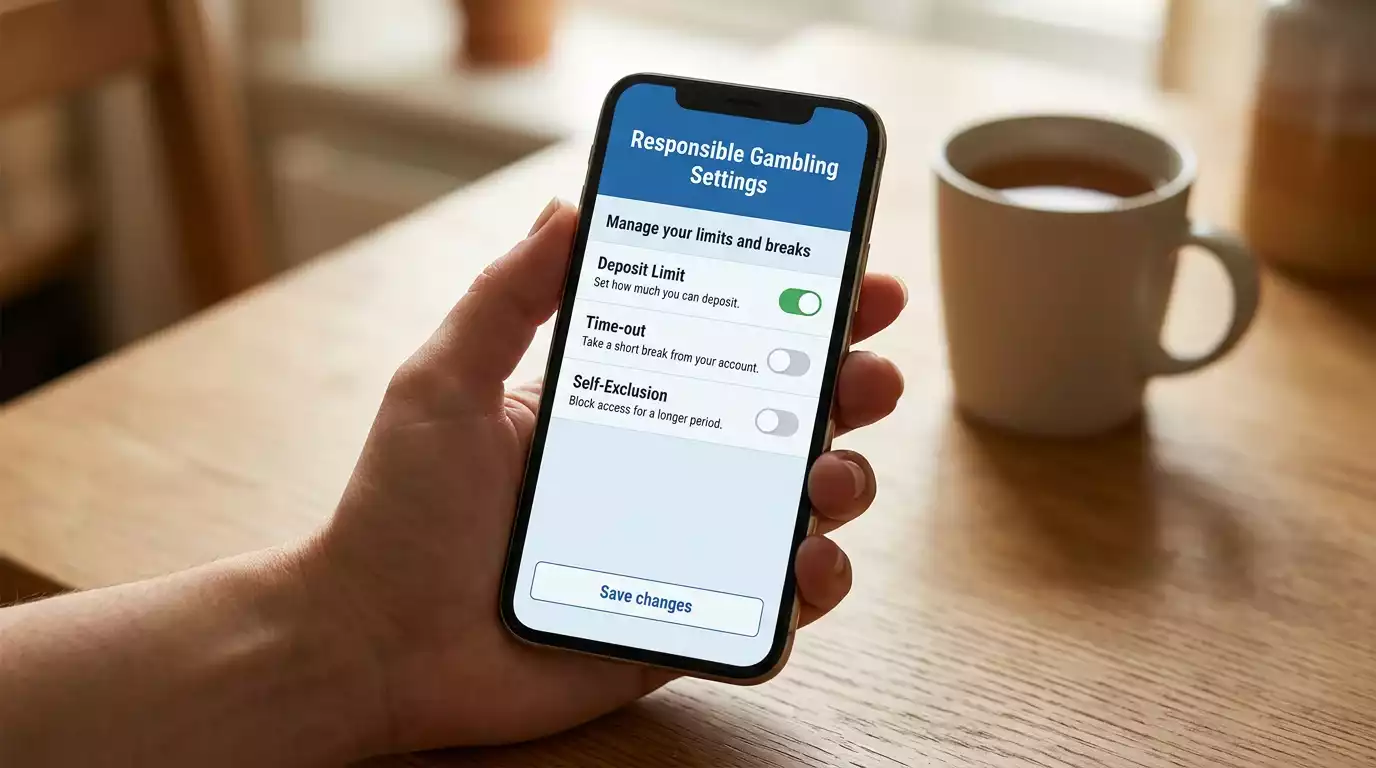
From October 2025: the first prompt you’ll see
Since 31 October 2025, every UKGC-licensed operator in Great Britain has been required to prompt new customers to set a deposit limit before taking their first deposit. Not a suggestion, not a footnote — a mandatory prompt, built into the onboarding flow, that you interact with before money moves. If you’ve opened a betting account in the last six months, you’ve seen this. It’s the regulatory shape of the new responsible-gambling landscape, and it’s both less dramatic than its critics claim and more useful than its sceptics allow. The prompt is a small intervention that produces a meaningful behavioural change — people who set a deposit limit at signup deposit less on average over the following year, and that’s exactly what the policy is designed to do.
This piece covers the tools actually available to UK racing bettors who want to manage their gambling — deposit and loss limits, time-outs and self-exclusion, GamStop, and support services like GamCare and NHS pathways. Not lectures. Just a practical map of what’s there and how to use it, because the people who need these tools often don’t know the full range, and the people who think they don’t need them sometimes do.
Deposit and loss limits
Deposit limits are the simplest tool in the kit. You set a maximum amount — per day, per week, or per month — and the operator refuses further deposits above that threshold in the qualifying window. If you set £50 per week and deposit £40 on Monday, you have £10 of deposit capacity remaining until the weekly window resets. The tool is universal across UKGC-licensed operators, adjustable by the customer, and — importantly — subject to cooling-off periods when you try to raise the limit.
The cooling-off rule is specific and worth understanding. If you try to increase a deposit limit, most operators impose a 24-hour delay before the increase takes effect — giving you a chance to reconsider in a cooler moment. Decreases to the limit apply immediately. This asymmetric design reflects the behavioural economics evidence that decisions to extend gambling are often made in emotional moments that cool off quickly, while decisions to restrict gambling are more considered.
Loss limits work similarly but cap your net losses rather than your deposits. Set a weekly loss limit of £100, and the operator blocks further staking once your cumulative net loss in that week reaches £100. Fewer operators offer loss limits than deposit limits, and the mechanic is less precise because net loss requires real-time tracking across potentially multiple open bets. But where offered, loss limits are a useful tool for punters whose issue is cumulative performance rather than gross deposit activity.
The overall UK gambling market context: gross gambling yield for the industry in 2024–25 reached £15.6 billion, up 3.5 per cent year on year and 10.2 per cent above the 2019–20 pre-pandemic level. Within that scale, the tools to manage individual gambling are available but underused — the vast majority of UK accounts operate without any customer-set limit in place, and the October 2025 mandatory prompt is specifically designed to raise the baseline adoption rate.
Time-outs and self-exclusion
Time-out is the middle tier between limit-setting and full exclusion. A time-out suspends your account for a defined period — typically 24 hours, 7 days, 1 month, or 3 months — during which you cannot log in, deposit, or bet. At the end of the time-out, the account unlocks automatically. The feature is intended for customers who want a break without committing to longer-term exclusion.
Self-exclusion is the operator-level longer-term tool. You self-exclude from a specific bookmaker for a period of at least six months (the UKGC minimum) and typically up to five years. During the self-exclusion period the operator won’t allow login, deposit, or bet activity from your account, and won’t send marketing to you. After the period expires, reactivation requires a specific customer request to the operator rather than automatic unlock — and many operators require a cooling-off period of 24 to 48 hours between the request and account reactivation.
Self-exclusion’s limitation is that it operates at the operator level. You self-exclude from one operator, and you can still open an account at another UK-licensed firm the next day if you choose to. The industry-wide alternative is GamStop, which we’ll cover next. For many punters, operator-level self-exclusion is enough — the specific firm where they’ve had issues is the one they need to block. For others, the broader reach of GamStop is the right tool.
Ian Murray MP, DCMS Minister, framed the government’s position on regulatory enforcement in a December 2025 Westminster Hall debate: “If someone is operating in the illegal market, we are coming after them — legislatively, regulatorily and with money.” The policy direction on the enforcement side sits alongside the customer-protection tools — the framework assumes that licensed operators offer adequate safer-gambling tools while unlicensed operators, by definition, don’t. For customers who need protection, staying in the licensed ecosystem is part of the point.
GamStop: UK-wide self-exclusion
GamStop is the national self-exclusion scheme operated by Gambling Commission-recognised non-profit organisations. Register with GamStop, and every UKGC-licensed operator in Great Britain is required to block your access for the duration of your self-exclusion period. The minimum period is six months; longer options include one year and five years. During the exclusion, you cannot open new accounts with any UK-licensed operator, existing accounts are locked, and marketing stops.
The mechanism works through a central database that UKGC-licensed operators check during account creation and login. Your registration details (name, date of birth, address) go into the database for the exclusion period, and any UK-licensed operator that accepts a customer matching the GamStop record is in breach of its licence conditions. The enforcement is strong on the licensed side.
The limitation of GamStop is the same limitation that applies across the UK regulatory framework — it doesn’t cover unlicensed operators. Registering with GamStop blocks access to the 3,086 UKGC-licensed operators (as of March 2025) but doesn’t block access to the 1,000 illegal gambling services that UK authorities are tracking. For customers whose gambling issues have led them to unlicensed operators, GamStop is a partial tool — it addresses the licensed market but not the black market exposure.
GamStop registration is free and takes about five minutes online. Once registered, the exclusion is effective immediately across UK-licensed operators — no waiting period, no per-operator action required. If you know you need to stop, the route through is simple and takes effect fast.
Support services: GamCare, NHS and wider help
Tools like deposit limits and GamStop are self-service. The other half of the responsible-gambling landscape is support — human help for people whose relationship with gambling has become difficult. GamCare runs the UK’s primary gambling support phone line and online chat service, available 24/7, staffed by trained advisers. The service is free and confidential, and you don’t need to be in crisis to call — a lot of GamCare’s work is with people who want to talk through concerns before those concerns escalate.
The NHS runs specialist gambling treatment services in England, Scotland and Wales, with expanded coverage under the 2024–25 NHS Long Term Plan allocation. These services handle more intensive cases — people for whom gambling has produced significant mental health impact, financial crisis, or relationship damage — and referral routes run either through your GP or through direct self-referral to the specialist clinics. The wait times vary but the service itself is free at the point of use.
For financial help specifically, organisations like StepChange and Citizens Advice have specialist gambling-harm modules within their broader debt and financial guidance services. Gambling debt has specific features — it can accumulate fast, it’s often hidden from family members, and it sits alongside emotional and mental health consequences that complicate pure financial advice. The specialist teams within these organisations are trained on that context.
One specific practical note: don’t wait for a crisis to use these services. The strongest outcomes happen when someone reaches out early — at the point of concern, not at the point of collapse. GamCare, NHS gambling services and support charities are built to help with questions and concerns, not just with emergencies. Using them early is both more effective and less distressing.
For the wider picture on UK racing betting — regulation, tools, structure — our complete 2026 punter’s guide to UK horse racing betting sets responsible gambling into the broader context of how British racing betting works.
Does GamStop cover Tote pools?
Yes, where the Tote is operated by a UKGC-licensed entity. Tote pool betting via licensed operators — Tote-operated online accounts and most UK racecourse Britbet terminals where linked to an online identity — is covered by GamStop self-exclusion. Cash bets placed anonymously on-course aren’t covered because the Tote has no customer record to exclude, but any account-linked pool betting falls within the GamStop framework alongside bookmaker accounts.
Can I reopen an account after self-exclusion?
After operator-level self-exclusion expires, you can request reactivation through the operator’s customer service — most firms require a cooling-off period of 24 to 48 hours between the request and the account becoming active again. After GamStop self-exclusion expires, you also need to take specific action to come off GamStop; accounts aren’t automatically reopened on your behalf. In both cases the system is designed so returning to gambling requires a deliberate decision, not passive re-entry.
What if my partner or family member has a problem?
Support for concerned family members is available alongside direct support for gamblers. GamCare’s phone line and online services accept calls from family members of people who gamble, and provide advice on how to raise concerns, what options exist for protecting household finances, and how to encourage the gambling family member to seek help themselves. You don’t need the gambler’s consent to call — the service is confidential and designed to help concerned parties navigate a difficult situation.
Written by the editors at Betting for Horse Racing.