What UK Bookmakers Can and Cannot Ask For
 Available in US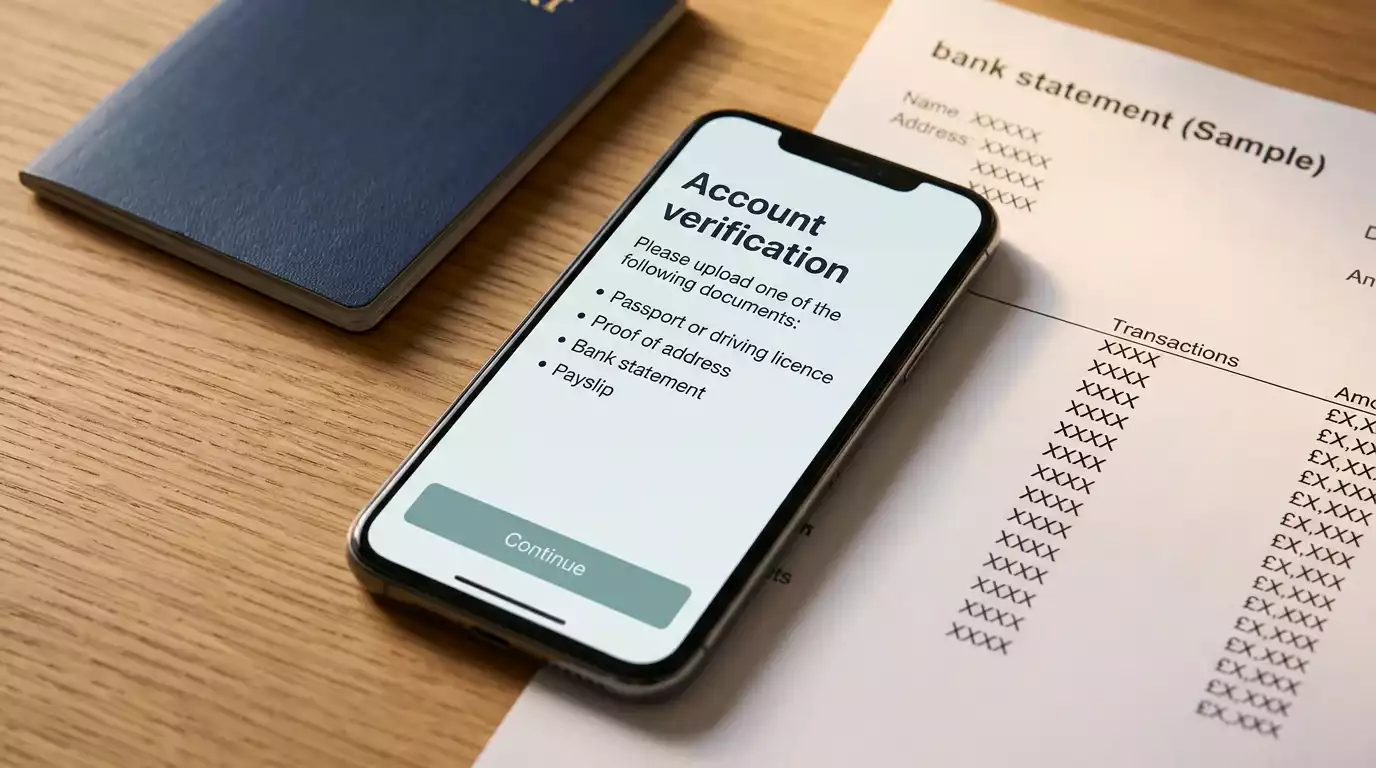
Two categories most punters never separate
I had a client once ring me, furious, because a bookmaker had asked for a P60 and he’d told them “you can’t make me give you that”. They couldn’t, strictly speaking. And then they closed his account. He was right about the law and wrong about the outcome, which is a distinction worth making at the start of any article on this topic. There is a huge gap between “what the bookmaker is legally entitled to demand” and “what they can ask for, before declining to process your withdrawal until you provide it”. Both are real categories. They are not the same.
The UKGC framework gives licensed operators a lot of latitude on documentation requests. It doesn’t give them the power to force you to comply – but it does give them the power to restrict or close your account if you don’t. So the practical question isn’t “can they ask?” It is “what happens if I refuse?” This piece maps both sides of that equation so you can make informed decisions before you click “upload” – or before you click “refuse”.
Identity verification and KYC basics
UK bookmakers are required by the UKGC to verify the identity of every account holder before permitting deposits or withdrawals. This is Know Your Customer – KYC – and the requirements flow from anti-money-laundering law, not from affordability rules. The documents typically requested at KYC are a government-issued photo ID (passport or driving licence) and a proof of address dated within the last three months (utility bill, council tax, bank statement).
This first-tier request is non-negotiable in a practical sense. An operator that skipped KYC would be breaching its licence conditions, and you as the customer would be unable to withdraw any funds from the account. The documents themselves are routine. What matters is the handling – look for operators that clearly describe their document retention policy, who they share data with, and how they delete records after account closure. Any firm that can’t tell you this clearly is one I’d avoid on those grounds alone.
The identity check is typically a one-off event at account opening, though KYC can be re-run if the operator has reason to doubt initial verification – for example, if a deposit source changes country, or if name and address data on a submitted bank statement doesn’t match the registered account details. A second KYC request years into an account isn’t normal but it isn’t abnormal either. Respond to it. It’s the lowest-friction category of request you’ll ever see from a UK bookmaker.
Source of funds requests
Source of funds is where the regulatory picture gets more interesting. Under UK AML law, operators have a duty to understand where a customer’s gambling money comes from once activity reaches certain thresholds – and the thresholds for source of funds are lower than many punters assume. Large single deposits, unusual deposit velocity, or activity that diverges sharply from what the operator would expect given the account’s stated profile can all trigger a source of funds request.
The standard request asks you to identify, broadly, where the money funding your betting comes from: salaried employment, self-employment, investments, property income, inheritance, gifts, or other specified sources. In most cases this is a simple declaration rather than a demand for documents – you tick a box, type a sentence, and the account continues. In higher-risk cases, or when the stated source doesn’t appear consistent with deposit patterns, the operator escalates to documentary evidence: payslips, dividend statements, tax returns, or letters from solicitors for inheritance or property proceeds.
The Racing Post Big Punting Survey 2025 – a 10,000-respondent piece of research – found 23.7 per cent of respondents had been subject to some form of affordability or source check by at least one bookmaker, up from 16.6 per cent two years earlier. So the base rate of these requests is rising. What hasn’t changed is the practical choice you face when one lands: comply, which means sharing financial documents with a commercial entity; or refuse, which means the account closes. There is no middle path that keeps the account open.
One technical point punters miss: a source of funds request is not the same as an affordability check, even though the two often arrive bundled. Source of funds asks where the money came from. Affordability asks whether losing the money would cause you harm. The documents requested can overlap, but the legal basis is different – source of funds is AML, affordability is consumer protection. A refusal on one can sometimes be accepted while the other proceeds. Most operators don’t distinguish clearly; it’s worth asking which framework a specific request falls under.
Bank statements and payslips
The bank statement and payslip request is probably the most common document pack UK punters face, and it deserves a paragraph on what you can and can’t do with it. An operator is permitted to ask for three to six months of bank statements and a recent payslip as part of affordability review. You are legally permitted to redact line items that are not relevant to the verification – specifically, transactions with no bearing on the gambling-related markers the operator is reviewing.
In practice, most UK operators will accept redacted statements provided the top and bottom of each page shows the bank name, account holder name, statement date range, and running balance, and provided the deposits to the gambling account itself are left visible. What they won’t accept is a statement with every line other than “deposit to bookmaker” blacked out – the context that surrounds your gambling spend is what they’re actually assessing. The midpoint is: redact personal shopping, health-related transactions, and anything you regard as genuinely sensitive; leave salary credits, recurring bills, and any other betting or gambling activity visible.
Payslips are less negotiable. The whole point of a payslip in an affordability context is to confirm income, so redacting anything material defeats the exercise. Names, employer, salary figure, and date are expected to be legible. National insurance numbers and bank account details on the payslip itself can be redacted; everything else is generally what the operator is looking at. The BGC estimates around 120,000 UK racing customers will face documentary requests in a given year, and of those, a meaningful share will refuse – consider which group you want to be in before the request arrives, not during.
Tax returns and investment documents
Tax returns enter the picture at the high-stakes end of the market and in specific source-of-funds cases, particularly for self-employed punters or those whose income comes from investments rather than salary. An SA302 or tax calculation from HMRC is the commonly requested document, often alongside the associated tax year overview.
Investment statements – brokerage account summaries, ISA statements, dividend vouchers – get requested when a customer declares investment income as their primary source of funds and the operator wants to verify the scale. The request is proportionate, in theory: a customer staking £200 a week isn’t asked for full brokerage records, but a customer with £50,000 in annual betting volume on an investment-income declaration might be.
What’s worth understanding is that these documents are high-sensitivity and the duty of care on operators handling them is correspondingly high. Encrypted upload channels are standard at well-run firms. Email attachment submission is not – if an operator asks you to email sensitive tax documentation as an attachment, that’s a signal worth questioning. Secure portal or nothing. Record what you submit, when, to whom, and via which channel, every time.
For the wider context on how affordability checks have reshaped UK racing betting since 2023 – including the regulatory framework these documentation requests sit inside – our guide to affordability checks and UK horse racing betting covers the full picture.
Can a bookmaker legally refuse withdrawal if I don’t comply?
Yes, under their licence conditions and account terms. A UKGC-licensed operator can freeze withdrawals pending completion of AML or affordability checks, and can close the account if those checks aren’t satisfied. Your legal position is that you can refuse to hand over documents, and their legal position is that they can refuse to process the account. The balance tips on whichever matters more to you – privacy or continued access.
Is redacting personal data acceptable?
Yes, within reason. UK bookmakers generally accept bank statements with non-gambling-related transactions redacted, provided the account identity details, statement period, running balance, and all gambling-related deposits remain visible. Fully redacted statements that black out everything other than deposits to the bookmaker itself are not accepted, because the context around gambling spend is what’s being assessed.
Published by the Betting for Horse Racing team.