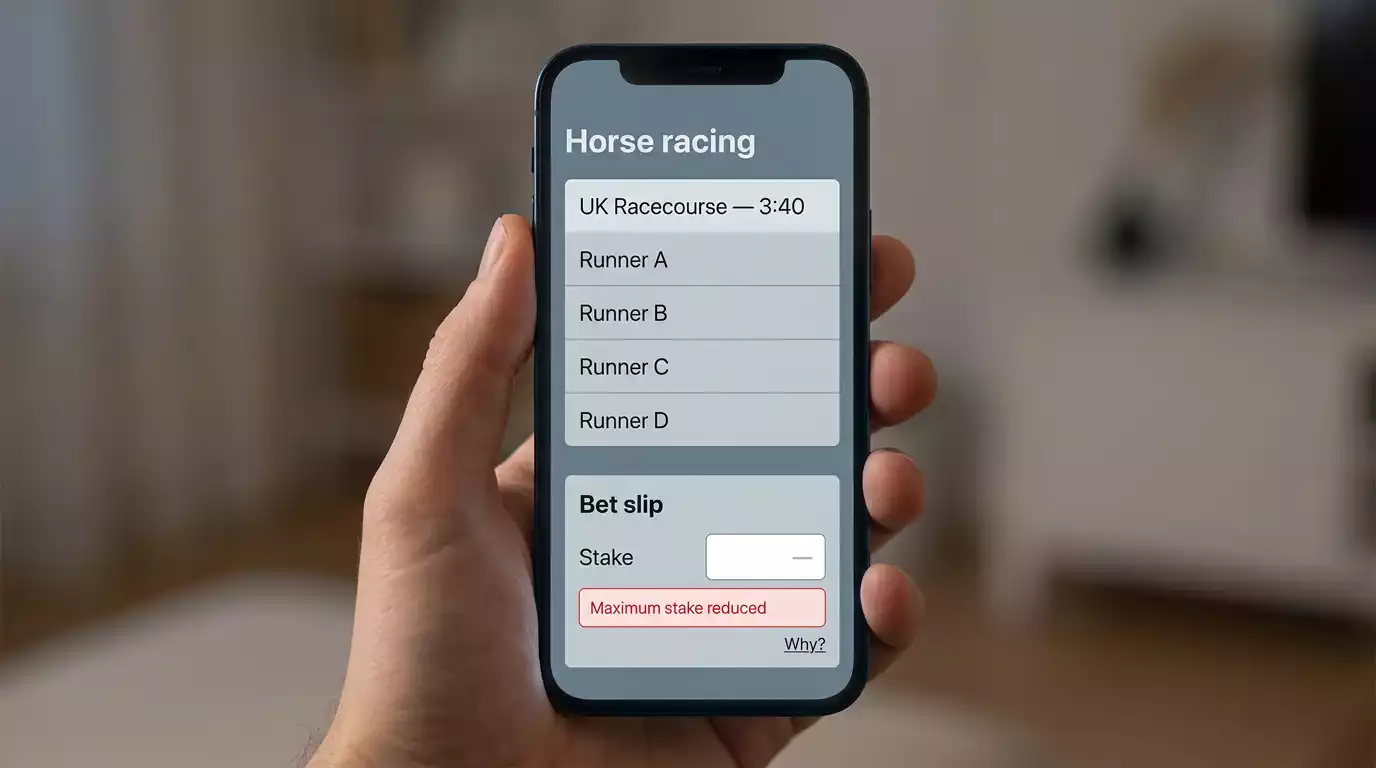
The Tote at UK Racecourses: How Pool Betting Actually Works
 Available in US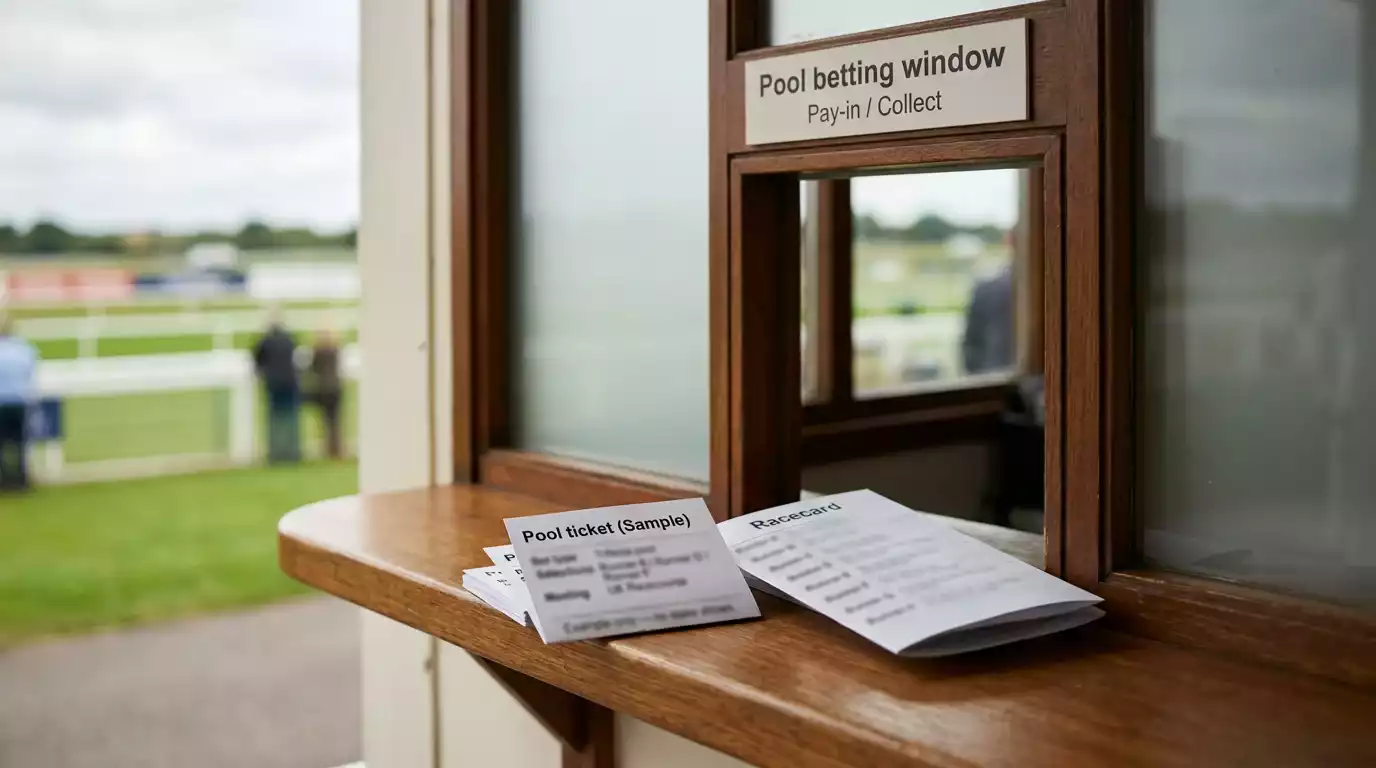
Betting against other punters, not the bookmaker
The best Tote day I ever had was a wet Wednesday at Newbury in my second year doing this properly. I put a quid on a 25/1 shot to win; the Tote return came back at £47.40 – nearly double what SP paid. I couldn’t work out why, at first. Then I walked past the pool board and saw that almost nobody had backed the horse. The SP bookmakers priced him around the market; the Tote paid out whatever the pool distributed after the winners took their share. Same horse. Very different payout.
That is the entire premise of pool betting in one paragraph. When you bet with a bookmaker, you bet against the house at a fixed price. When you bet with the Tote, you bet into a pool with every other pool punter, and the total money in that pool – minus the operator’s deduction – gets split among the winners in proportion to their stakes. You’re betting against the crowd, not the bookmaker. And the crowd, it turns out, prices very differently than a professional trader does.
Pool versus fixed-odds, the basics
A fixed-odds bet locks your price at the moment you place it. £10 at 5/1 pays £60 back. The bookmaker wears the risk. If the horse wins, they pay. If the horse loses, they keep your stake. The price you took is the price that settles.
A pool bet is different at every step. The pool starts empty. Punters stake into it. When betting closes at the off, the operator subtracts its deduction – typically between 16.5 and 30 per cent depending on which pool – and what’s left is divided among the winning tickets. Your “odds” are never fixed; they are calculated after the race from the pool breakdown. That’s why a Tote win dividend is published as “£X to a £1 stake” rather than as a price. You find out what you won after it won.
The structural consequence is that pool betting rewards unpopular selections. If a horse attracts 5 per cent of the pool money and wins, that 5 per cent takes the full payout – often higher than SP on longshots, sometimes dramatically higher. If a horse attracts 40 per cent of the pool and wins, the payout gets diluted across all those tickets, often lower than SP. On favourites, the Tote usually loses the comparison. On outsiders, and especially on second or third favourites who attract less attention than the market leader, the Tote frequently beats SP. This is a known shape. Sharp punters exploit it.
The scale context matters too. Pool betting represents roughly 5 per cent of total UK betting turnover – the rest is fixed-odds from bookmakers. So the Tote is a structurally small market, which is itself an opportunity: small markets are less efficient, and less efficiency means more pricing edges for punters who do their homework.
Win and place Tote bets
The Tote Win bet is the simplest pool bet. One horse to win the race. Dividend declared after the off. Minimum £2 stake. That’s it. The maths is the same as fixed-odds in spirit – you either win or you don’t – but the payout reflects pool dynamics rather than market pricing.
Tote Place is where the place rules diverge from fixed-odds each-way. The Tote pays on specific place counts: two places for 5–7 runners, three places for 8–15 runners, four places for handicaps with 16 or more runners. Same structure as bookmaker each-way place portions, but with one difference that matters – Tote Place is a standalone bet, not the place half of an each-way. You can stake £5 Tote Place on a horse without also staking £5 Tote Win, which you cannot do with bookmaker each-way.
Tote Place dividends are often sharply different from the each-way place portion of a fixed-odds bet. On a race where one very short-priced favourite draws heavy pool money to win, the place pool can pay surprisingly well because the favourite’s money distorts the win pool but leaves other horses with proportionally more of the place pool when they land. I’ve seen Tote Place dividends of £3.50 to £1 on horses priced around 4/1 – a place return you wouldn’t sniff from a bookmaker’s each-way.
Exacta, trifecta and the pool equivalents of forecast and tricast
The Tote Exacta is the pool equivalent of a straight forecast: first two in correct order. The Tote Trifecta is the pool equivalent of a tricast: first three in correct order. Both settle by pool division after deduction, and both share the dynamic that makes Tote bets interesting – when an unpopular sequence lands, the dividend can be vastly bigger than CSF or computer-tricast would have paid.
The minimum stake is £1 on both. Combinations are handled much like bookmaker combination forecasts – naming three horses for an Exacta runs three bets in each direction per pair, and the cost multiplies quickly. Trifecta combinations across four or more selections run into stake totals that need to be checked before confirming. Tote terminals at racecourses show combined cost on-screen; online apps vary, but the good ones now display the combined total before you commit the bet.
Where Exacta and Trifecta earn their place in a serious punter’s toolkit is on races with unclear second and third positions. If you have a strong view on the winner but think second and third could come from a pool of three or four horses without obvious market order, the Trifecta’s pool structure often pays better than the equivalent tricast precisely because fewer casual punters are willing to stake on complex Trifecta tickets. That’s an efficiency gap. It’s real money.
Placepot and Quadpot strategy
Placepot is one of the two pool bets in British racing that draws casual punters alongside the sharps, and it rewards an approach the rest of this article might not have prepared you for – breadth over depth. The bet needs you to pick a placed horse in each of the first six races at the nominated meeting. “Placed” means inside the Tote Place distance for that field size. Get six in a row, you’re alive at the pool’s final distribution.
The structure punishes narrow thinking. A Placepot with one horse per race costs £2 total but runs the risk of a single short-priced favourite blowing the whole ticket at race two. Smart Placepot players spread stakes – often three or four horses in the tricky races, one in the obvious-favourite race – and tolerate the higher total stake because it materially lifts the probability of survival. A £20 Placepot with good horizontal coverage will outperform a £2 Placepot with no coverage over the long run, because the bet’s difficulty comes from the sequence, not any single leg.
Quadpot is the four-race version covering races three to six at the meeting. Lower stake, lower difficulty, lower dividend – but a useful bet when you’ve missed the first two races of the card and still want pool exposure. Dividends on Quadpot can be modest when favourites run the table, but on meetings where early results go against the crowd the Quadpot often pays handsomely because casual punters who bust their Placepots early don’t even enter the Quadpot pool. It’s a bet that rewards paying attention mid-afternoon.
One practical tip: Placepot and Quadpot pools move during the card. Money keeps coming in until the first leg goes off, which means your paper calculation of expected dividend at 13:00 is already out of date by 14:30. Don’t over-commit based on early pool size.
Britbet and the on-course pool network
Britbet is the cooperative Tote network owned by 55 UK racecourses, running pool betting on-course as an alternative or complement to fixed-odds bookmakers in the ring. The attendance context is worth noting here – UK racecourse attendance in 2025 reached 5.03 million, the first time over 5 million since 2019, rising 4.8 per cent year on year – and a meaningful portion of that crowd bets via Britbet terminals rather than trackside bookmakers.
For on-course punters Britbet offers access to the same win, place, Exacta, Trifecta, Placepot and Quadpot bets as the Tote elsewhere, plus meeting-specific pools and occasional jackpot pools. The dividends are pooled across the Britbet network, meaning a small local meeting and a major festival both contribute to and draw from the same mathematical pool for each bet type. Some pools are meeting-specific – Placepot runs per meeting – while others, particularly the larger jackpot pools, pool across the day’s full UK racing card.
Pool betting sits alongside the fixed-odds markets that most punters use by default – and picking between them on any given race is the skill worth learning. Our UK horse racing bet types guide compares pool and fixed-odds bets side by side so you can choose by race, not by habit.
Why can Tote dividends exceed SP on longshots?
Because pool betting divides the pool among winning tickets proportionally to their stakes. When few punters back an outsider, the winning tickets take a larger share of the pool than SP would have paid. On favourites the reverse is usually true – the pool gets crowded and dividends fall below SP. The edge is in unpopular selections with genuine chances.
Can I play the Tote online?
Yes. Tote bets are available online via the Tote’s own platform and through UK bookmakers that carry pool integration. On-course Tote terminals operate through Britbet across 55 UK racecourses. Pool and dividend structures are the same whether you bet online or at the track – your stake enters the same mathematical pool in both cases.
Is the Tote deduction fixed across bet types?
No. The Tote takedown varies by pool – win and place pools carry one deduction rate, Exacta and Trifecta another, and Placepot and Quadpot typically higher. Exact rates are published on the Tote’s rules page and on Britbet’s on-course signage. Factor the deduction into any expected-value calculation for pool bets, because it sits between the gross pool and your dividend.
Written by the editors at Betting for Horse Racing.