Live Race Streaming at UK Bookmakers: What You Get and What You Don’t
 Available in US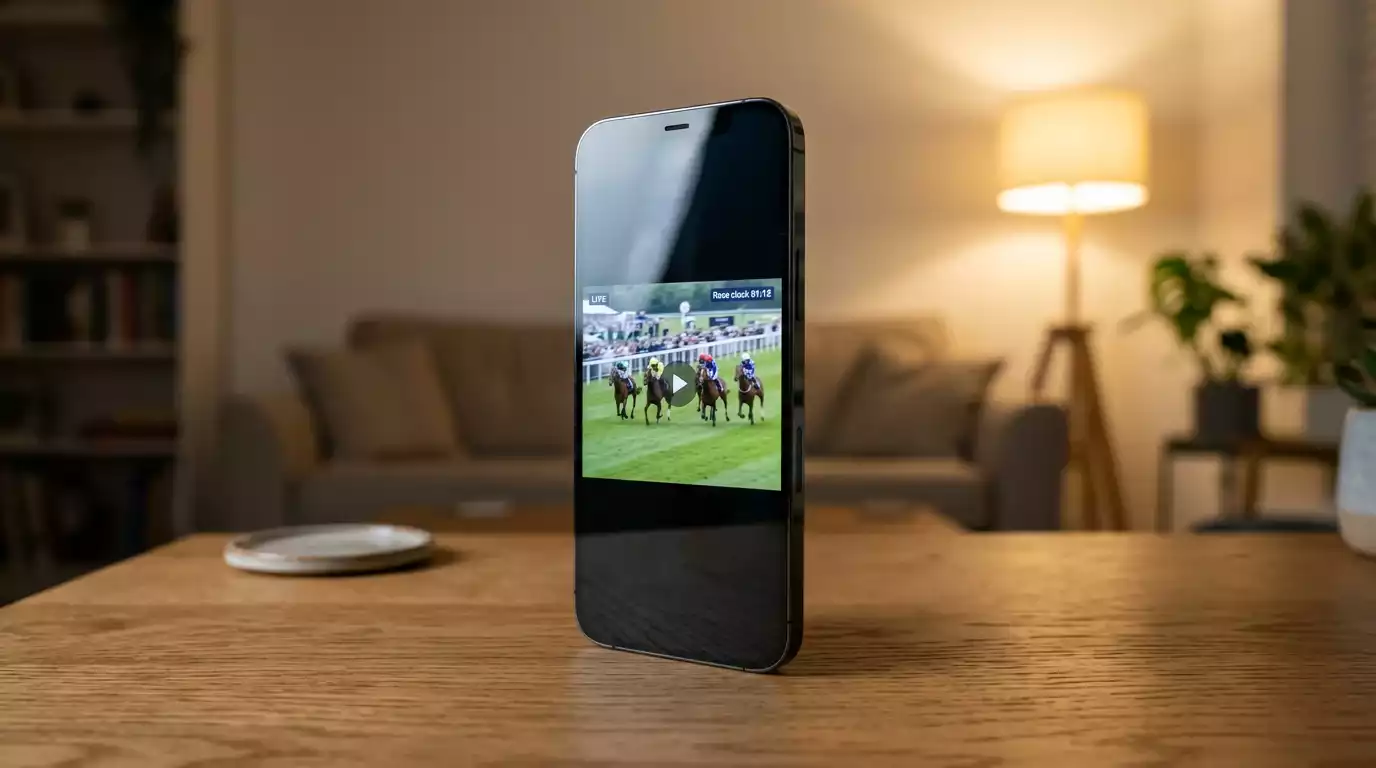
The hidden condition on most streams
First time I tried to watch a midweek card via a bookmaker stream, the feed wouldn’t open. The message was vague — “live stream unavailable”. I assumed technical problem, tried a different browser, same result. Took me about ten minutes of poking around before I found the footnote: stream available only with a funded account and an active bet on the race. I had neither. That’s the hidden condition on most UK bookmaker streams, and it’s the first thing new streamers should understand before they sit down with a cup of tea expecting free race coverage.
Bookmaker streaming isn’t broadcast-style television. It’s commercial streaming funded by the expectation of bet activity, and the conditions attached to access reflect that. Free-to-air coverage via ITV Racing and Racing TV is a parallel and different product. This piece explains what triggers a live stream at UK bookmakers, the difference between UK and international coverage, typical quality and latency, and where sectional data and replays sit in the overall streaming picture.
What triggers a live stream
The common trigger models across UK bookmakers run in three shapes. First: an active bet on the race. You place a bet of £0.50 or £1 minimum on the race in question, and streaming activates on the race page. Bet settles, stream plays, you watch the race you’ve bet on. Most economical approach — the stream cost comes out of your bet stake, not a separate subscription. This is the most common model in the industry and it’s what you’ll encounter at most mainstream UK firms.
Second: a funded account balance. Some firms allow streaming with no specific bet placed on the race, provided your account has a positive balance above a minimum threshold — £5 or £10 typically. You can stream while scouting, then bet if you want to. Less common than the “bet to stream” model, but present at specific firms and more generous where it exists.
Third: customer-tier streaming. Certain operators offer expanded streaming privileges to higher-tier customers (VIP programmes, high-volume accounts, or specific membership levels). This can include streaming without requiring bets on specific races, access to extended race coverage (pre-race parade, post-race analysis), or dedicated mobile app features. The trade-off for VIP-tier access is account profile — you need the volume to qualify, which for most recreational punters means the standard “bet to stream” model applies.
Context matters: the 24.4 million active accounts at UK remote betting firms at end of March 2025 drive enormous streaming demand, and the streaming-rights economics work because that demand translates into bet volume. The models that appear “free” to the punter are actually funded by aggregate bet activity across the customer base.
UK and international coverage
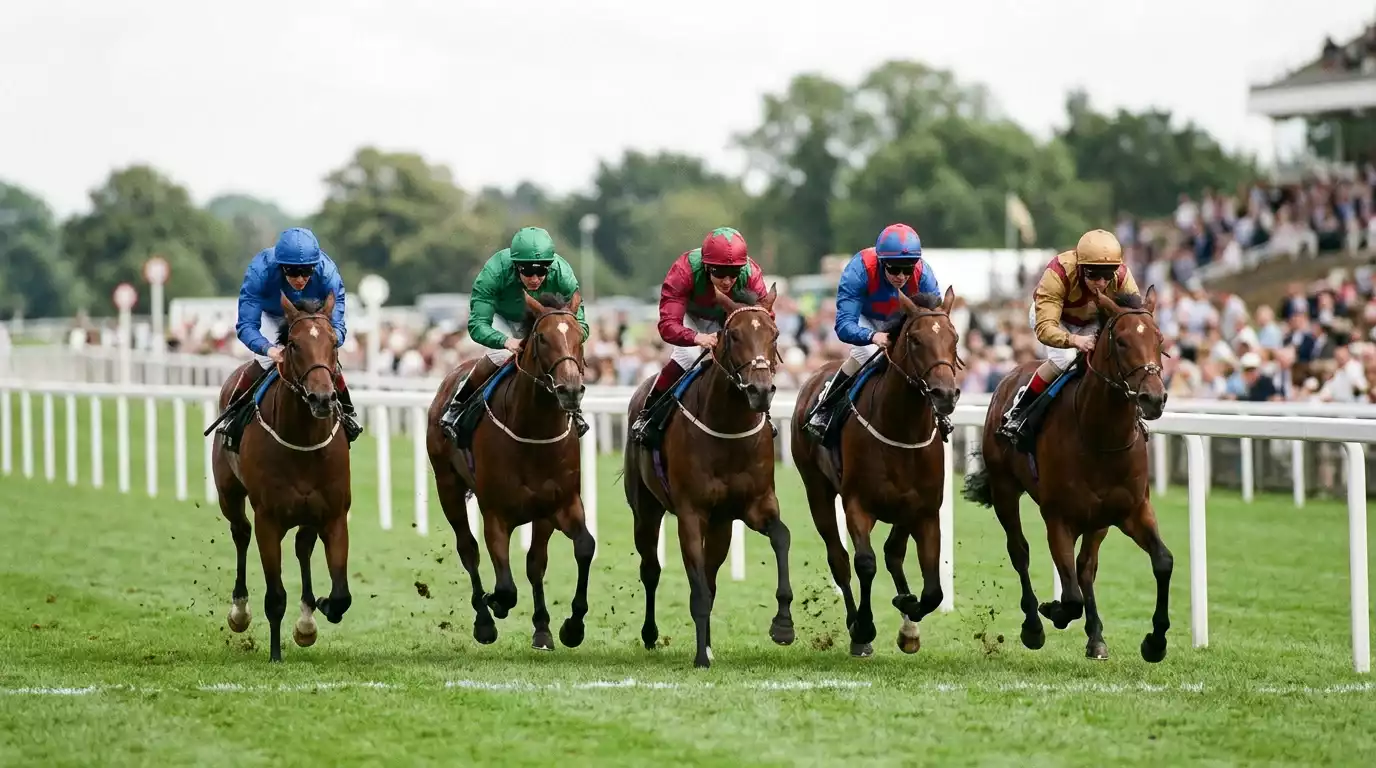
UK meetings are universally covered by UK bookmaker streams. Every major firm streams every UK meeting that’s running, from championship festival racing at Cheltenham and Ascot to midweek all-weather cards at Southwell or Wolverhampton. This universal coverage reflects the fact that UK racing is the primary commercial product UK bookmakers sell, and the streaming rights are bundled into the broader broadcast licensing structure between racecourses, broadcast partners, and operators.
Irish racing is also comprehensively covered at most UK firms — the commercial relationship between Irish and UK betting markets is deep enough that Irish meeting coverage is treated as de facto domestic. Ireland’s Racing TV output feeds into most UK firms’ streams directly.
International coverage is where the picture fragments. South African, Australian, Hong Kong, Japanese, French and Dubai racing all feature at specific UK bookmakers, but not universally. Some firms cover every major international jurisdiction; others cover only UK and Ireland plus selected international flagships (the Dubai World Cup, Breeders’ Cup, Prix de l’Arc). If international coverage matters to you — early-hours Sydney or afternoon Tokyo cards, for example — check the specific firm’s coverage list before assuming.
One specific gap: US racing is covered less consistently by UK firms than Asian or Australian racing, despite the commercial scale of US racing markets. The rights landscape for North American racing is more fragmented, with several different broadcasters controlling different meetings, and UK operators have to negotiate piecemeal. Punters interested in specific US meetings often find themselves comparing several UK operators’ coverage lists before finding the right match.
Stream quality and latency
Stream quality at mainstream UK bookmakers has improved materially over the last five years. Standard-definition at 480p used to be the norm; 720p HD is now typical, with some firms offering 1080p on desktop streams where bandwidth permits. Mobile streaming remains lower-resolution by default to accommodate mobile data connections, but improved over time as phone screens got better.
Latency — the delay between live action on the racecourse and appearance on your screen — is the more interesting technical metric. Bookmaker streams typically run 15 to 30 seconds behind the true live event, due to the encoding and distribution pipeline. This latency is comparable to most broadcast television, which runs similar delays for the same technical reasons. If you’re in-play betting on a race, the latency matters — the race you’re watching is not the race the bookmaker’s market is pricing, and sharp in-play opportunities can disappear in the latency gap.
Technical context: the UK’s £766.7 million in horse racing remote betting GGY for the year to March 2025 sits alongside in-play markets as a meaningful share of that total, and the latency on bookmaker streams is part of what makes retail in-play horse racing particularly difficult to beat. The pros working in-play typically use racecourse live feeds via professional data services, not bookmaker streams, for this exact reason.
Quality varies more on midweek all-weather meetings than on marquee festival racing. Premium festival streams are well-produced, with multiple camera angles, professional commentary, and stable delivery. Midweek coverage at smaller tracks can be single-angle camera work, local commentary (or none at all), and occasional buffering under high concurrent-user load. The quality gap reflects the underlying broadcast rights — bigger meetings pay for better production.
Replays and sectional data
Race replays are increasingly a routine feature at UK bookmakers. Most major firms offer replays of races on their site within an hour of the off, often sooner. Replays are typically available to anyone with a funded account — the bet-to-stream requirement rarely extends to after-race replays, which suggests the rights economics for replays are different from live.
Multi-angle replays are an emerging feature at the top end of the market. Side-on cameras, front-on finish, head-on finish, and zoomed patrol cameras can all be available for major races, letting punters review how specific incidents played out or how specific horses handled specific sections of the course. Useful for form analysis; less useful for most recreational betting. The investment in multi-angle capture is commercial, and it’s concentrated on the meetings that generate the most betting volume.
Sectional data — split times at specific points of the race — is increasingly bundled with replays at the top tier of UK racing, particularly at flat meetings equipped with TurfTrax or equivalent tracking systems. Sectional data feeds into form analysis but rarely into real-time betting decisions, because the data is only available after the race. For form-focused punters, bookmakers carrying sectional data alongside replays are more useful than those who don’t, and the availability of sectional feeds is one of the genuine differentiators between mainstream firms.
Post-race stewards’ enquiries and photo finishes are usually shown on stream with a short delay after the race ends. A race that goes to an enquiry might have its stream replay held back until the enquiry resolves, which can take 10 to 20 minutes. Don’t treat the stream’s first replay as the final record — wait for the official result before acting on any close-finish calls you see on stream.
For the wider picture on choosing a UK racing bookmaker — where streaming, BOG, extras, withdrawal speed and other criteria fit together — our guide to choosing a UK horse racing bookmaker provides the full selection framework.
Do I need an open bet to watch?
At most UK bookmakers yes, though the qualifying stake can be as low as 50p. Some firms allow streaming with a funded account balance above a minimum threshold without requiring a specific bet on the race, but these are a minority. VIP-tier customers at some firms get expanded streaming without per-race bet requirements. For most punters most of the time, a small qualifying bet is the standard route to live coverage.
Is UK terrestrial coverage still better?
For production quality and commentary, yes — ITV Racing and Racing TV’s Sunday terrestrial coverage typically offers broader production than most bookmaker streams, with dedicated presenters, replays, and analysis. What bookmaker streams offer instead is breadth — every UK meeting on a given day, including meetings no terrestrial broadcaster covers. For punters who bet across the full UK card, bookmaker streams fill the coverage gaps; for watching specific marquee races with the best production, terrestrial remains the better product.
Can I watch on mobile without using data?
If your mobile device is connected to a wi-fi network, yes — streaming quality is comparable to desktop over wi-fi. On a mobile data connection, streaming works but consumes bandwidth significantly; most UK mobile data plans handle moderate streaming, but an afternoon of continuous race coverage can consume several gigabytes. Check your mobile plan’s data allowance before committing to a heavy streaming day on cellular data.
Written by the editors at Betting for Horse Racing.