Extra Places Offers: When They Actually Add Value
 Available in US
The promotion that rewrites each-way maths
On a 16-runner handicap where the standard each-way rule pays four places, an extra places offer paying six places can lift the expected value of an each-way bet by 12 per cent or more on the right horse. That’s not a rounding error — that’s a structural shift that changes whether the bet makes sense at all. And yet I watch punters treat “extra places” as a minor promotional sweetener, a kind of garnish on top of a bet they’d have placed anyway, rather than as the specific reason to place a bet that wasn’t attractive at standard terms.
This piece unpacks the arithmetic of when extra places genuinely add value, how the various UK firms’ offers compare in structure, the specific situations (festival handicaps, big-field ITV races, Saturday features) where extras turn losing bets into winning ones, and the mistakes that punters make in trying to exploit them. If you understand the maths, extras are a legitimate long-term edge; if you don’t, they’re a marketing hook that may or may not line up with a bet worth placing.
Default place rules versus extras
UK industry standard for each-way place terms: two places for fields of 5 to 7 runners at 1/4 odds, three places for fields of 8 to 15 runners at 1/5 odds, four places for handicaps with 16 or more runners at 1/4 odds. The Grand National’s 40-runner handicap falls firmly in the four-places bracket by default. Grade 1 conditions races typically fall in the three-places bracket because fields are smaller.
Extras offers modify the place count, the odds fraction, or both. The most common extra is an additional place or two: a six-places offer on a 16-runner handicap adds places 5 and 6 to the standard four. A five-places offer adds only place 5. A seven-places offer is occasionally seen on Grand National-type fields. Some offers change the fraction from 1/4 to 1/5 at the same time, which reduces the place-half payout per place but adds more places — the trade-off is specific to the horse’s price.
Combining the two variables: a six-places at 1/5 odds offer on a 14-runner handicap means you get six places paid (up from the standard three), each paying at one-fifth odds (down from one-quarter). Whether that trade is favourable depends on the horse. Short-priced favourites benefit less from extras because they’re already priced to place; genuine longshots benefit materially because their placing probability rises faster than the fraction drops.
Bookmaker offers compared
Most major UK bookmakers run extra places offers on the biggest festival races — the Cheltenham handicaps, the Grand National meeting, Royal Ascot and the Glorious Goodwood handicaps. The pattern across firms has become fairly consistent at this point: five or six places paid on qualifying ITV races on Saturdays, rising to six or seven on marquee festival handicaps, usually with a maximum stake cap between £25 and £50 each-way.
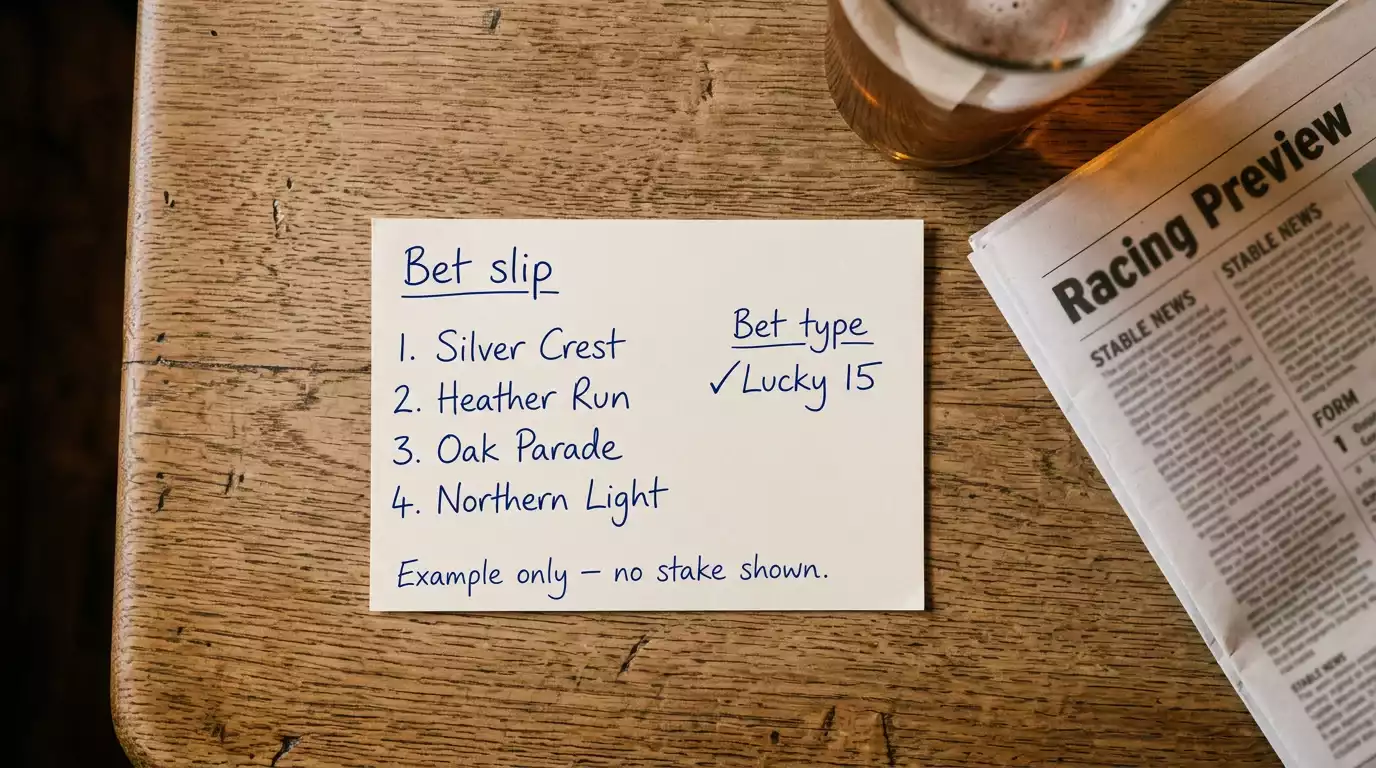
What varies is the qualifying criteria. Some firms offer extras across all ITV Racing coverage; others restrict to specific marquee races. Some run standing “six places on all 16+ runner handicaps” offers; others reserve extras for weekend features. Some firms offer one fraction for extras (1/5 across the board); others offer 1/4 on standard places with 1/5 only on the added extras. Reading the specific terms for each day’s racing is a ritual sharp punters do before placing each-way bets; casual punters often assume the bet is standard each-way and miss the extras unless they’re specifically highlighted on the slip.
Grainne Hurst, chief executive of the Betting and Gaming Council, framed the levy-and-black-market tension around UK racing’s economic position directly: “These parasite operators don’t pay tax, don’t care about safer gambling, and do not contribute a penny to the levy.” The subtext for the extras promotions landscape is that licensed UK firms compete on extras partly because they can’t compete with offshore operators on other terms — the promotional structure is part of how the regulated market retains customers in the face of unlicensed alternatives. Extras are a feature of that competition.
When extras change expected value
The arithmetic of extras only works positively on horses whose placing probability under the extras offer materially exceeds the standard placing probability. For a 20/1 horse in a 16-runner handicap: standard placing probability (top 4) might be around 15 per cent. Placing probability under a six-places offer rises to approximately 22 per cent. That seven-percentage-point uplift, applied to the place-half payout, is the mathematical source of the extras value.
Let’s run the numbers. £10 each-way on that 20/1 horse under standard terms: win half expected value £10 × 0.05 × 21 = £10.50, place half expected value £10 × 0.15 × 6 = £9 (place-half payout is £10 × 1/4 × 20 + £10 stake = £60 for a place at 20/1; expected value is £60 × 0.15 = £9). Total expected return £19.50 against £20 stake. Negative EV: the overround has taken its cut.
Under a six-places at 1/5 odds offer: win half unchanged at £10.50 expected. Place half recalibrates: payout at 1/5 of 20 = 4/1, so £10 × 5 = £50 per place; expected value £50 × 0.22 = £11. Total expected return £21.50 against £20 stake. Positive EV. The extras have converted the bet from a losing proposition to a winning one purely through the structural change.
The magic only works in specific parameter ranges. On a 3/1 favourite, the extras uplift in placing probability is small relative to the fraction reduction, and EV typically moves in the wrong direction. On a 100/1 longshot, the placing probability is too low for the extras uplift to lift EV into positive territory even with six or seven places. The sweet spot is horses priced roughly 14/1 to 40/1 in medium-to-large handicap fields — which happens to be exactly the price range most ITV-featured handicap favourites and second favourites fall into. Not a coincidence; this is the commercial target of extras promotions.
Festival-specific extra places
Grand National day runs extras offers that go beyond the normal ITV weekend pattern. Some firms pay seven or even eight places on the National itself; most pay six; competition between firms pushes the place counts as high as the operator’s risk team will permit. The 2025 Grand National saw industry-estimated turnover of £250 million across 12 million adult bettors, and the extras competition is part of why the race retains such commercial pull against the migration pressures that have cost the licensed market on other races.
Cheltenham Festival handicaps — particularly the Coral Cup, the Ultima, the Kim Muir, the Pertemps and the Grand Annual — usually run with extra places across most major firms during festival week. Six places at 1/4 or 1/5 is typical; some firms step further on specific races. All 28 races at the festival fell inside the top 31 most-backed races of 2025, and the extras promotions are calibrated to the commercial opportunity each race presents to bookmaker customer acquisition.
Royal Ascot and Glorious Goodwood feature heavy extras during their five-day meetings. The flat racing extras landscape is broadly similar to the jumps landscape, with the addition that international runners at Royal Ascot sometimes carry different terms — some firms exclude overseas horses from extras offers, some don’t, and the terms vary by meeting. The Ebor handicap at York, the Ayr Gold Cup, the Cambridgeshire and the big Newmarket handicaps also typically feature extras.
One practical note: extras offers are usually advertised prominently on the day, but some firms push the promotion via email only, and the extras don’t apply unless you’ve opted in. If you don’t see an extras marker on the bet slip for a race you thought qualified, check your promotional email history and the firm’s “today’s offers” page before placing. Opted-in extras deliver the value; unopted-in extras on the same race don’t.
For the wider picture on choosing a UK racing bookmaker — how extras fit alongside BOG, fast withdrawals, and the other factors worth weighing — our guide to choosing a UK horse racing bookmaker brings the full criteria together.
Are extras limited to ITV races?
Most UK firms target extras at ITV-covered racing because those races attract the broadest casual audience, but many firms offer extras on additional meetings too — particularly Saturday handicap features, festival racing across Cheltenham, Aintree, Royal Ascot and Glorious Goodwood, and occasional mid-week specials. Standing offers of extras on all 16-plus runner handicaps exist at a handful of firms, but they aren’t universal. Check each firm’s current promotions page before placing.
Can I combine extras with BOG?
Yes, at most UK bookmakers — extras and BOG are independent promotions that apply simultaneously where both qualify. Your each-way bet at a taken price on a qualifying race can settle at a BOG-adjusted win price on the win half, with the place half paid across the extra places under the extras offer. Maximum-stake caps apply to each promotion separately; check the specific terms before assuming both apply to the full stake amount.
Prepared by the Betting for Horse Racing editorial staff.