Grand National Each-Way Strategy: The Extra Places Maths
 Available in US
The bet that rewards doing the arithmetic
The Grand National is the one day of the year when each-way actually pays. The rest of the season, each-way on a handicap is an acceptable bet or a mediocre one depending on the race shape. On the first Saturday in April, each-way becomes the default – and extra places offers turn the bet from “sensible” into “mathematically superior to win-only” for most horses in the field. That’s not a marketing line. It’s a straightforward expected-value calculation, and it’s the reason sharp punters who never otherwise touch each-way go deep on Aintree day.
Getting the maths right matters because the Grand National is also the race where most bets are placed by people who don’t usually bet. Roughly 82 per cent of Grand National stakes are for £5 or under – this is a mass-market race, and the mass market mostly stakes blind. Understanding the each-way structure, the extra places variations, and where the genuine value sits in the field separates an informed £5 bet from a hopeful one. Same money. Different expected return.
Standard each-way rules for the National
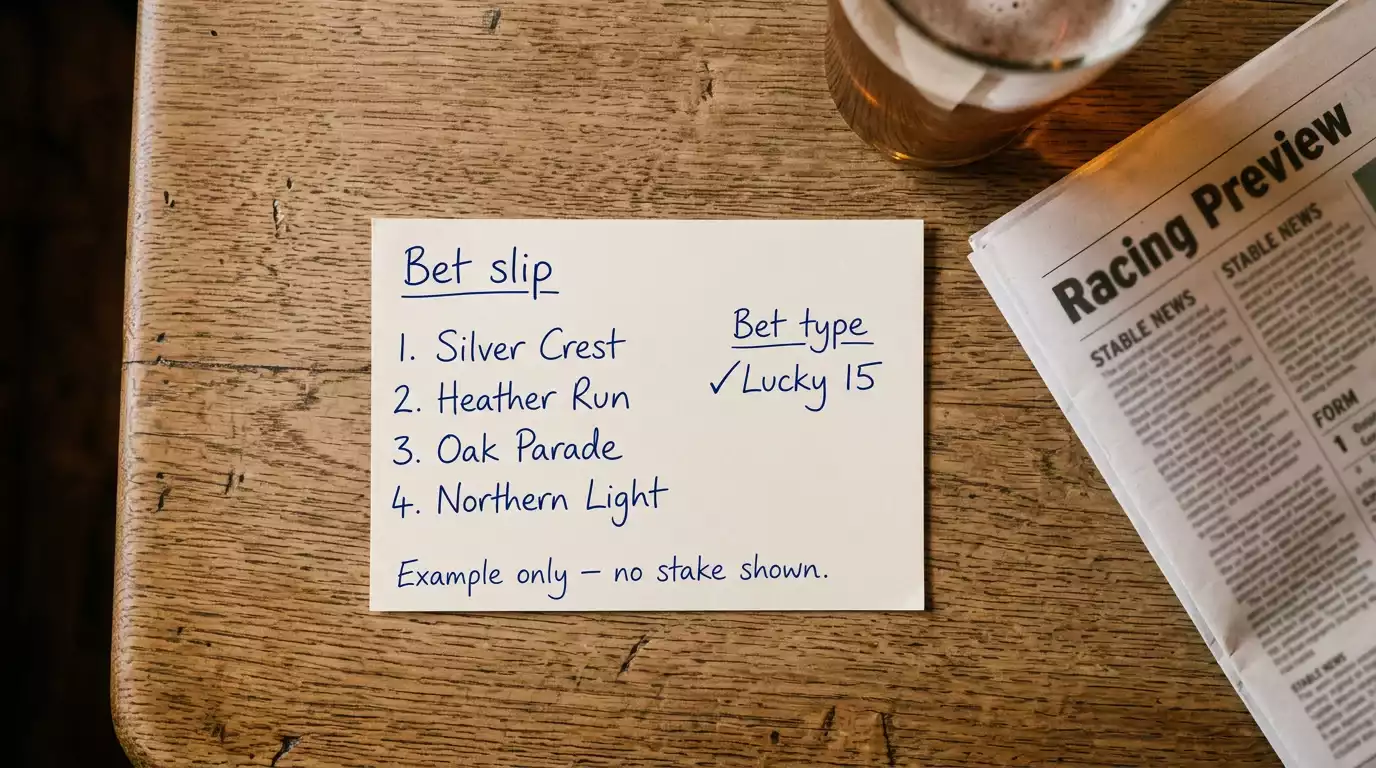
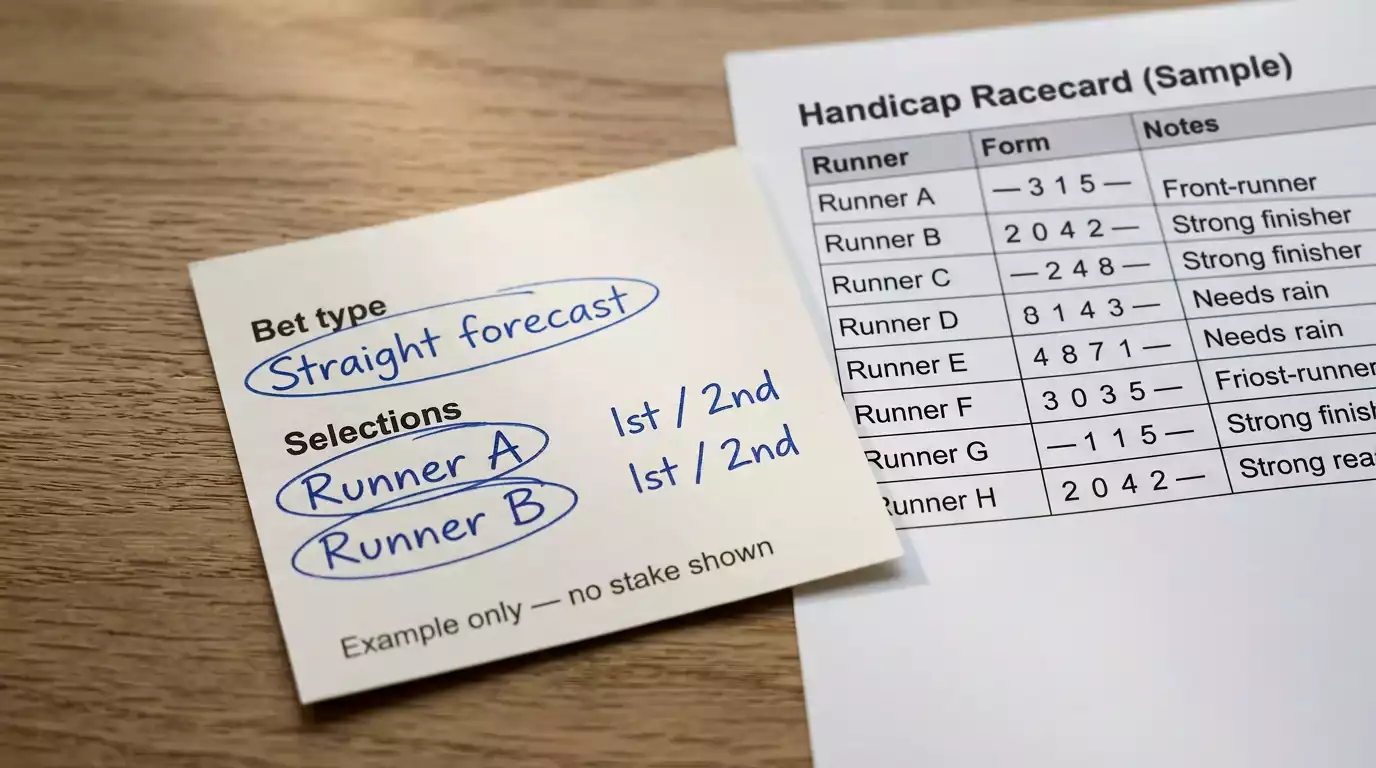
An each-way bet is two bets in one: half the stake on the horse to win, half on the horse to place. A £10 each-way is really £5 win plus £5 place – total stake £10 – so any advertised £5 each-way bet costs £10, not £5. This catches out first-time National punters every year.
The place portion pays at a fraction of the win odds. UK industry standard for handicaps with 16 or more runners is one-quarter odds on the first four places. The Grand National, with its historic 40-runner field, falls firmly in this bracket – four places at 1/4 odds as the baseline. So a horse backed at 20/1 pays a place portion of 20 × 1/4 = 5/1, meaning the place bet on a 20/1 horse returns 5/1 on that £5 half-stake: £30 back, including the stake. Combined with the losing win half, the slip returns £30 from an initial £10 outlay if the horse finishes in the first four. Profit of £20.
Where it gets interesting: most UK bookmakers enhance the place terms for Grand National specifically, paying either one-fifth odds or bumping the number of places paid. Different firms, different offers, and the offers shift year on year. Read the day-of-race terms before staking. The default industry practice is the ceiling – many firms go further on the National because mass-market demand justifies the acquisition cost.
Extra places offers explained
The extra places promotion pays each-way on more than the standard four places. Typical offers run to five places, six places, or occasionally seven. The mechanics are simple: if your horse finishes anywhere in the expanded place-paid positions, the place portion of your each-way bet lands. A sixth-place finish at 25/1, under an extra-places-to-six offer, returns the same place dividend as a fourth-place finish – £5 × (25/4) + £5 = £36.25.
What changes is expected value. The probability of a horse finishing in the first six instead of the first four, in a 40-runner handicap, is materially higher – not linearly proportional, because the first four places already include the most likely finishers, but meaningfully higher all the same. Rough ballpark for a mid-priced horse: the probability of placing in the top four might be 10 per cent, the probability of placing in the top six closer to 15 per cent. That 5-percentage-point uplift, multiplied across the place-portion payout, is the whole reason extra places matter.
The Grand National 2025 saw industry estimates of £250 million in total bet volume across 12 million adult bettors, with roughly £10 million – about 5 per cent of that – estimated to have flowed to the black market. The sheer scale of the market is why operators compete so hard on extra places terms: mass-market attention in one race generates acquisition spend that wouldn’t be justified at any other meeting.
EV calculation and when extras genuinely pay off
Expected value of an each-way bet is the probability-weighted return across win, place, and nothing scenarios, minus the stake. For a 20/1 horse with a 5 per cent win chance and a 12 per cent place chance (standard four places), the win half pays £105 × 0.05 = £5.25 expected, the place half pays roughly £30 × 0.12 = £3.60 expected, total expected return £8.85 against a £10 stake. Negative EV – the market’s overround has taken its cut.
Now add extra places to six. The place probability for the same horse rises – let’s say 17 per cent – and the place half’s expected return becomes £30 × 0.17 = £5.10. Total expected return now £10.35 against £10 stake. Positive EV. The extras turned a losing bet into a winning one at the margin, purely through the structural change in what counts as a placing run.
This is not a universal rule. Extras don’t magically make every horse a value bet – they reward specific profile types: mid-range priced horses (15/1 to 40/1) with genuine stamina for the Grand National trip but no real win claim. Top-of-the-market favourites get minimal uplift from extras because their placing probability is already priced aggressively. Outsiders above 66/1 get minimal uplift because their placing probability is also low, just at the other end. The sweet spot is the wide middle of the field, which in a 40-runner National is roughly horses priced 12/1 to 50/1 – and that’s a large number of horses to scan. The work is in identifying which of them have the genuine profile rather than the nominal price.
One warning: extras offers often carry maximum stake caps. A firm that offers “six places at one-fifth odds” on the Grand National might limit the offer to £50 each-way maximum – anything above that reverts to standard terms. The EV calculation only applies inside the cap.
Picking the right each-way horse
The National specifically rewards a profile you don’t always want in a shorter handicap. Stamina over four miles two furlongs, jumping experience over variations of the Aintree fences, ability to handle a field of 40, and typically a weight carried of 10 stone 8 pounds to 11 stone 2 pounds – outside that band, historical each-way hit rates drop noticeably. Top-weight horses rarely place; bottom-weight horses rarely have the class. The middle of the handicap is where each-way punters earn their money.
Recent form matters, but not in the way it matters in shorter races. I look for horses that finished respectably in one of the major stayers’ chases earlier in the season – the Welsh National, the Classic Chase at Warwick, the Denman Chase, the Becher Chase, the Grand Sefton. A horse that ran a solid fourth or fifth in one of those, beaten but keeping on, is often the profile that finishes fourth to sixth at Aintree. Not glamorous form. Exactly right for the each-way calculation.
Trainer profile matters too. A handful of yards – Closutton in Ireland, the Nicholls operation, the Henderson yard, a couple of specialist Irish trainers – consistently produce National-ready stayers with the right balance of class and stamina. First-time National trainers win the race occasionally but the each-way-placed profile skews heavily toward repeat-preparation yards. It’s one of the few handicaps where trainer bias is this pronounced, and it’s worth weighting in selection.
Finally: stake selection for the bet, not the price you imagine the horse at. If the extras offer caps at £50 each-way but your natural stake would be £20 each-way, stake £20 – don’t stretch. If the offer caps at £25 and your conviction justifies £50, split the stake across two firms if their offers overlap on the same horse. This is standard practice in the sharp segment and it’s entirely available to recreational punters who compare offers before the race.
For the full picture of Grand National betting – ante-post markets, weight analysis, jockey and trainer patterns at Aintree – our Grand National betting guide puts each-way strategy in the wider context of how the race actually bets.
Is each-way better than win-only on the National?
On the Grand National specifically, each-way is almost universally the mathematically stronger choice for horses priced 12/1 or longer, especially when extras offers apply. The 40-runner handicap structure, combined with enhanced place terms, shifts expected value toward the place half of the each-way bet for most of the field. Win-only makes sense mainly on shorter-priced horses you genuinely think will win, not merely place.
Do extra places apply to ante-post too?
Usually no. Most UK bookmakers restrict extra places offers to bets placed on or around race day, typically from the morning of the National or in some cases from 48 hours before. Ante-post bets placed weeks or months ahead settle under standard place terms – four places at 1/4 odds – even if the same firm advertises a six-place offer closer to the race. Check the specific terms, because a minority of operators do extend extras to ante-post.
Published by the Betting for Horse Racing team.